Nigeria Secures ₦450 Billion in Local Renewable Energy Financing Commitments as Jaiz Bank Joins Expansion Drive
Nigeria’s renewable energy sector has reached a significant financing milestone, with local funding commitments rising to ₦450 billion following a new ₦100 billion agreement between the Rural Electrification Agency and Jaiz Bank.
The development reflects increasing participation by Nigerian financial institutions in efforts to expand electricity access, particularly in communities underserved by the national grid.
According to Punch Newspapers, the agreement was formalised through a Memorandum of Understanding signed at the Rural Electrification Agency’s headquarters.
The partnership is expected to create additional financing opportunities for renewable energy developers and support the delivery of decentralised electricity projects.
Jaiz Bank Joins Growing Renewable Energy Financing Network
The ₦100 billion agreement brings Jaiz Bank into an expanding group of local institutions supporting the Rural Electrification Agency’s clean energy financing programme.
Other participating financial institutions include Lotus Bank, First City Monument Bank, Stanbic IBTC and Alpha Morgan.
The Rural Electrification Agency believes that increased access to domestic capital will be essential for delivering renewable electricity projects at scale.
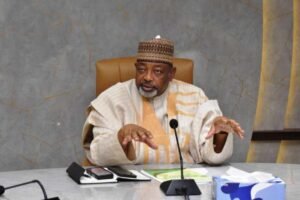
According to its Managing Director, Abba Aliyu, mobilising local financing can help strengthen the sector’s long-term sustainability.
However, the ₦450 billion figure represents announced financing arrangements and commitments. It should not be interpreted as confirmation that the entire amount has already been disbursed or invested in completed projects.
Why Local Financing Is Important
Renewable energy infrastructure often requires substantial upfront investment.
Developers must purchase solar panels, batteries, electrical components and other equipment before electricity projects can begin generating revenue.
For many Nigerian companies, obtaining affordable and appropriately structured financing remains a major challenge.
International financing can also expose developers to foreign exchange risks, particularly when loans are denominated in dollars while electricity revenues are earned in naira.
Greater access to domestic financing may help selected developers manage these challenges.
It could also strengthen cooperation between commercial banks and the renewable energy industry.
Rural Electrification Projects Continue to Expand
Beyond the financing agreements, the Rural Electrification Agency highlighted several recently commissioned electricity projects.
These include a 1.6-megawatt interconnected mini-grid at the Federal University of Lafia.
Another project at Oke-Oyi has a capacity of approximately 581 kilowatts-peak.
The agency also referenced electricity systems in Ballagaza and Marayar Rogo, Kano State, with a combined capacity of 265 kilowatts-peak.
These installations demonstrate the growing role of distributed renewable energy solutions in providing electricity to institutions and communities.
What This Means for Nigerian Businesses
Access to reliable electricity is essential for productivity across Nigeria’s economy.
Small manufacturers, agricultural processors, retail businesses and healthcare facilities often depend on alternative electricity systems because of unreliable grid supply.
Expanding renewable energy projects could reduce dependence on petrol and diesel generators where technically and commercially suitable.
Solar mini-grids and hybrid systems may also support businesses operating in rural communities.
For companies in the renewable energy value chain, greater financing availability could create opportunities in equipment supply, installation, engineering and maintenance.
Opportunities for Local Solar Companies
The financing milestone may strengthen the commercial outlook for Nigerian renewable energy developers.
Companies with well-structured projects, realistic revenue projections and clear operational plans may be better positioned to attract financing.
Equipment distributors and service providers could also benefit as developers undertake new installations.
Nevertheless, actual project opportunities will depend on the terms of financing agreements, developer eligibility and the implementation of approved projects.
Supporting Nigeria’s Electricity Access Goals
Nigeria continues to face significant electricity access and reliability challenges.
Expanding power generation through decentralised systems could help reach communities where conventional grid expansion is slow or expensive.
The REA is also implementing the Distributed Access through Renewable Energy Scale-up programme, supported by the World Bank.
That initiative complements efforts to mobilise financing from Nigerian institutions.
The Bigger Picture
The ₦450 billion financing milestone signals growing institutional interest in renewable energy development.
However, the real economic impact will depend on converting financing commitments into operational electricity projects.
For Nigeria’s economy, the opportunity lies in using renewable energy investment to improve electricity access, strengthen local businesses and support sustainable industrial development.
A successful financing programme could also encourage greater private-sector participation in addressing the country’s energy challenges.




Post Comment