Nigeria Targets $8.5 Billion Solar Market Opportunity as Experts Push for Local Manufacturing and Renewable Energy Investment
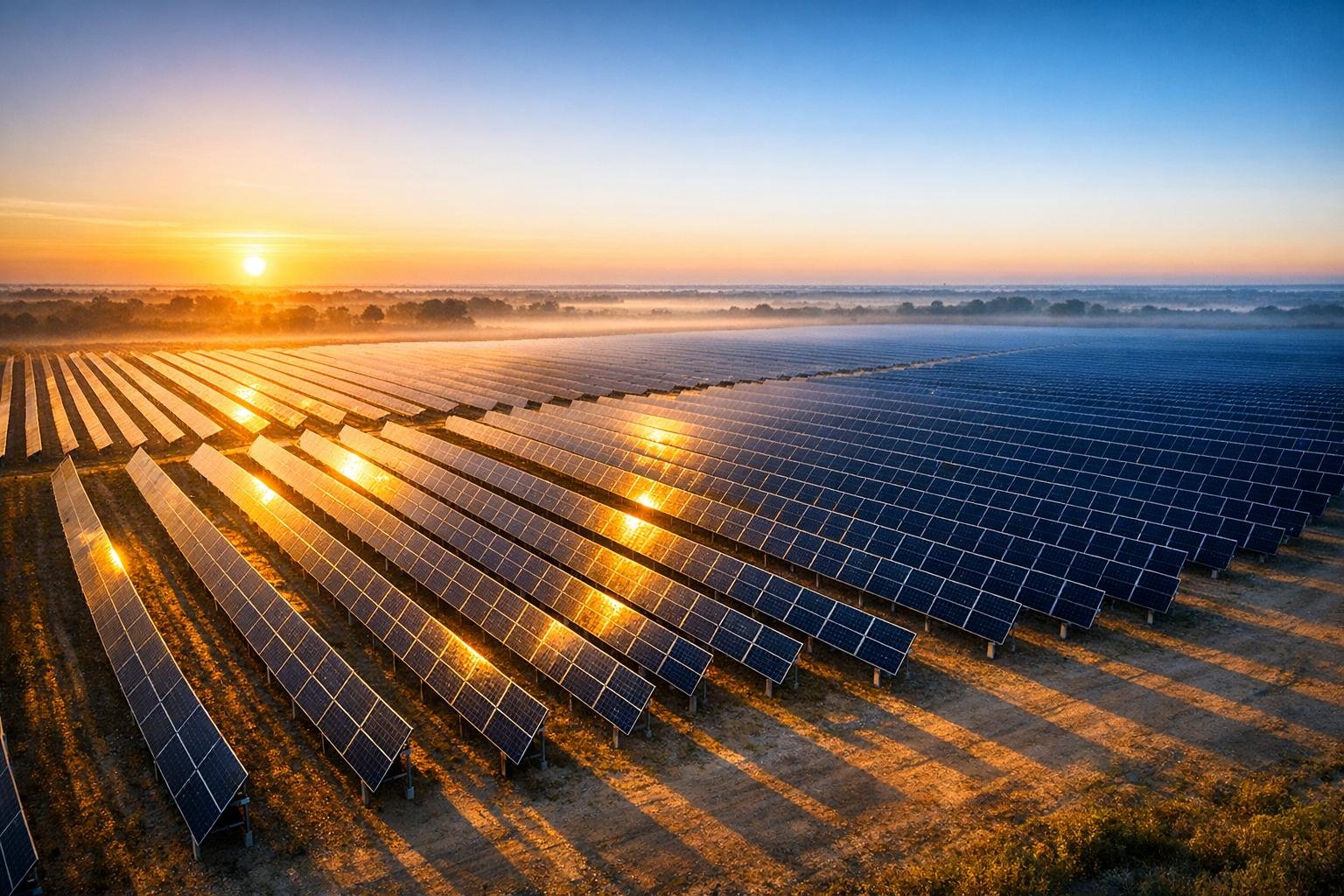
Nigeria could unlock approximately $8.5 billion in commercially viable solar investment opportunities by 2030, as rising electricity demand across West Africa creates new prospects for renewable energy manufacturing, distribution and infrastructure development.
The opportunity was highlighted by energy experts during discussions at the Nigerian Pavilion at COP31 in Türkiye.
According to Punch Newspapers, stakeholders believe Nigeria has the natural resources, commercial demand and industrial potential to become a major renewable energy manufacturing hub for West Africa.
However, they warned that the country must reduce its heavy dependence on imported solar equipment and strengthen domestic manufacturing capacity to capture more value from the growing market.
A Multibillion-Dollar Renewable Energy Opportunity
During the discussion, Michael David, Executive Director of the Global Initiative for Food Security and Ecosystem Preservation, highlighted the scale of Nigeria’s renewable energy market.
Citing estimates attributed to the International Finance Corporation, he said the country offers approximately $8.5 billion in commercially viable solar investment opportunities by 2030.
He also indicated that broader distributed renewable energy opportunities could exceed $18 billion over the next decade.
These figures represent estimated investment opportunities rather than funding already committed or projects currently under construction.
The potential market includes solar manufacturing, battery storage, electricity distribution, agricultural energy systems and supporting infrastructure.
Nigeria Imports Billions of Naira Worth of Solar Equipment
Despite its natural resources and expanding demand for alternative electricity, Nigeria remains heavily dependent on imported renewable energy equipment.
David stated that the country imported approximately 2.9 million solar panels in the previous year, at a cost exceeding ₦450 billion.
The substantial import expenditure demonstrates the scale of domestic demand.
However, it also raises questions about how much of the economic value generated by the growing solar industry remains within Nigeria.
Industry stakeholders believe that developing local manufacturing and assembly facilities could create opportunities for employment, technology development and reduced dependence on imported equipment.
Mineral Resources Could Support Local Production
Nigeria possesses several minerals used in renewable energy technologies.
These include silica, lithium, copper, aluminium, graphite, manganese, nickel, cobalt and other industrial materials.
Some of these resources can support solar panel production, electrical components and battery manufacturing.
The minerals are found in different parts of the country, including Nasarawa, Kogi, Kwara, Niger, Plateau and other states.
However, mineral availability alone does not guarantee that domestic manufacturing will be commercially competitive.
Developing a functional industrial value chain would require processing facilities, technical expertise, reliable electricity, suitable financing and strong quality-control standards.
West Africa’s Electricity Deficit Creates Export Opportunities
The opportunity extends beyond Nigeria’s domestic electricity market.
According to figures presented during the discussion, approximately 185 million people in West Africa lacked electricity access in 2023.
This represents a substantial potential market for renewable electricity systems.
Nigerian companies capable of manufacturing competitively priced solar panels, batteries and supporting equipment could potentially serve customers in neighbouring countries.
Regional expansion could also create opportunities for engineering companies, energy developers and equipment distributors.
However, success would depend on product quality, pricing, trade logistics and access to financing.
Solar Energy Could Transform Agricultural Production
Agriculture was identified as another sector with significant renewable energy potential.
Solar-powered irrigation systems could help farmers reduce dependence on fuel-powered pumps.
Solar-powered cold-storage facilities may also support the preservation of agricultural produce, potentially reducing post-harvest losses.
For agro-processing businesses, reliable electricity can improve productivity and reduce disruptions.
These applications suggest that renewable energy investment could produce benefits beyond household electricity supply.
Financing Remains a Major Challenge
Despite the opportunities, the high upfront cost of solar systems continues to limit adoption.
Low-income households and small businesses may struggle to purchase solar panels, inverters and batteries without suitable financing arrangements.
Industry stakeholders have therefore called for expanded access to affordable credit, improved product standards and stronger technical training.
For Nigerian solar companies, customer financing models and reliable after-sales support could become increasingly important competitive advantages.
The Bigger Picture
Nigeria’s renewable energy opportunity is not limited to installing solar panels.
It also includes local manufacturing, mineral processing, battery production, agricultural productivity and regional exports.
If Nigeria can develop the required infrastructure and financing systems, the renewable energy transition could become a major source of industrial development, investment and employment.
The challenge will be converting the estimated $8.5 billion market opportunity into commercially viable projects and sustainable businesses.











Post Comment