Nigeria’s Interest Rate Could Fall to 18.6% by 2028 as Fitch Forecasts Gradual Economic Recovery
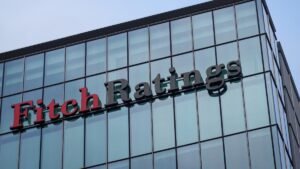
Nigeria could experience a gradual reduction in interest rates over the next two years, with global credit rating agency Fitch Ratings projecting that the country’s average monetary policy rate will decline to 18.6% by 2028.
The forecast suggests a possible shift towards less restrictive monetary conditions as inflation moderates and Nigeria’s economic reforms continue to take effect.
However, analysts expect borrowing conditions to remain relatively expensive in the near term.
According to Punch Newspapers, the projections were presented by Fitch Ratings Director of Sovereigns, Gaimin Nonyane, during the agency’s Nigeria Sovereign Rating Review and Outlook presentation.
Fitch Projects Gradual Interest Rate Reductions
Fitch expects Nigeria’s annual average monetary policy rate to decline progressively over the coming years.
The agency’s projections indicate an average rate of 25.4% in 2026, compared with 27.3% in 2025.
The rate is forecast to fall to 21.7% in 2027 before declining further to 18.6% in 2028.
These figures represent projected annual average policy rates, not guaranteed year-end rates or commercial bank lending rates.
The Central Bank of Nigeria has already begun easing monetary policy.
In September 2026, the apex bank reduced its Monetary Policy Rate from 26.5% to 23%, representing a 3.5-percentage-point reduction.
The decision marked a significant shift from the aggressive interest rate increases used to tackle inflation.
Falling Inflation Supports the Outlook
Fitch’s forecast is supported partly by expectations that inflation will continue moderating.
The agency projects year-end inflation of approximately 15.1% in 2026, followed by 12.2% in 2027 and 10.9% in 2028.
Nigeria’s latest official figures show headline inflation declining to 14.06% in October 2026, compared with 14.63% in September.
This represents the fifth consecutive month of easing inflation.
Nevertheless, food inflation remains elevated at 19.13%, highlighting the continued pressure on households.
Lower inflation does not necessarily mean that goods and services are becoming cheaper. It generally means that their prices are increasing more slowly.
What Lower Interest Rates Could Mean for Businesses
High interest rates remain a major challenge for companies that depend on bank financing.
Manufacturers often require loans to purchase machinery, expand production capacity and maintain working capital.
Small businesses may also need credit to increase inventory, open new locations or invest in technology.
If monetary policy becomes less restrictive, commercial lending conditions could gradually improve.
However, lower policy rates do not automatically lead to immediate or equivalent reductions in bank loan rates.
Lenders also consider credit risk, funding costs, collateral requirements and the wider economic environment.
Nigeria’s Economy Expected to Maintain Growth
Beyond interest rates, Fitch expects Nigeria’s economy to continue expanding.
The agency projects gross domestic product growth of 4.3% in both 2026 and 2027, followed by 4.2% in 2028.
It also expects gradual improvements in Nigeria’s fiscal position, although government borrowing and inflation remain important challenges.
Stronger growth could create opportunities for businesses if it is accompanied by improvements in infrastructure, investment and household purchasing power.
What Investors Should Watch
A sustained reduction in interest rates can influence investment decisions.
Lower rates may eventually reduce the yields available on newly issued fixed-income investments, while potentially improving financing conditions for companies.
Investors may also reassess the relative attractiveness of bonds, treasury bills, equities and other asset classes.
However, investment decisions should account for inflation, market risks and individual financial objectives.
The Bigger Picture
Fitch’s forecast offers a potentially encouraging outlook for Nigeria’s economy.
The projected decline to 18.6% by 2028 suggests that monetary policy could gradually become more supportive of investment and business expansion.
Nevertheless, the forecast is not a commitment by the Central Bank of Nigeria.
Actual policy decisions will depend on inflation, exchange-rate conditions, financial stability and other economic developments.
For Nigerian businesses, meaningful progress will come when lower inflation and interest rates translate into more affordable financing, stronger consumer demand and improved operating conditions.





Post Comment