STL Capital Group, COPE Expand Breast Cancer Awareness and Free Screening Initiative
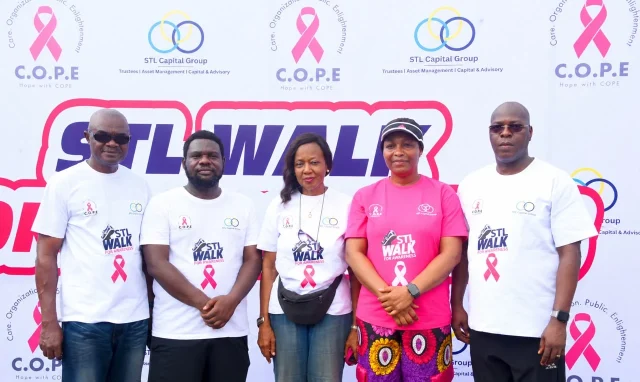
STL Capital Group and the Care Organisation Public Enlightenment (COPE) have strengthened their partnership to promote breast cancer awareness and early detection, combining public education with free screening for members of the community.
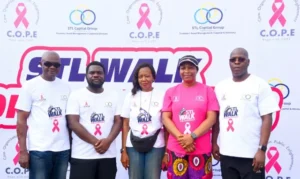
The initiative, which has entered its fourth consecutive year, featured an 8km breast cancer awareness walk, free breast screening and the distribution of educational materials aimed at encouraging people to seek timely medical attention.
The partnership forms part of STL Capital Group’s corporate social responsibility efforts and reflects the growing role of private-sector organisations in supporting public health initiatives.
Focus on Early Detection
Speaking during the awareness exercise, Group Managing Director of STL Capital Group, Funmi Ekundayo, said the campaign was designed to reach more people with information about breast cancer and the importance of early detection.
She explained that the awareness walk also targeted men and women, noting that breast cancer education should not be viewed as an issue affecting women alone.
Ekundayo encouraged members of the public to take advantage of available screening opportunities, stressing that early detection can significantly improve health outcomes.
STL Capital Group said it remains committed to working with COPE and other organisations with similar objectives as part of its broader CSR agenda.
Corporate Responsibility Beyond Profit
Executive Director of STL Capital Group, Akin Oni, urged other companies to take corporate social responsibility more seriously, particularly in areas that directly affect community wellbeing.
He said corporate contributions could extend beyond breast cancer awareness to other public health challenges, arguing that businesses have a role to play in supporting initiatives that improve access to healthcare and encourage preventive care.
For companies, such initiatives increasingly form part of broader environmental, social and governance considerations, as stakeholders place greater emphasis on how businesses contribute to the communities in which they operate.
COPE Sustains Free Screening Programme
The partnership has also helped COPE expand access to breast cancer screening for women who may otherwise face financial barriers to preventive healthcare.
COPE’s Managing Director said the organisation conducts free breast ultrasound screening every third Saturday of the month, with support from corporate partners and other organisations.
The organisation’s monthly programme runs from February to November, providing women with access to clinical and ultrasound breast screening between 10am and 2pm.
COPE has previously said that its partnership with STL has enabled more than 300 women to receive free screening, while awareness campaigns have reached thousands of others.
Awareness Remains Critical
COPE continues to encourage women to seek medical attention when they notice unusual changes, including breast lumps, changes in breast size or shape, nipple inversion, unusual discharge or skin changes.
The organisation has also stressed the importance of regular self-examination and early medical assessment rather than allowing fear or stigma to delay treatment.
Beyond screening, COPE’s programme provides beneficiaries with educational materials and information designed to encourage continued breast health awareness.
Private Sector Partnerships Can Expand Healthcare Access
The STL-COPE initiative highlights how partnerships between businesses and non-governmental organisations can help address gaps in access to preventive healthcare.
While government remains central to healthcare delivery, corporate-backed programmes can complement public services by providing targeted screening, health education and community outreach.
For STL Capital Group, the initiative also demonstrates how CSR programmes can move beyond one-off donations towards sustained, measurable interventions that address specific community needs.
As the partnership enters another year, both organisations are positioning continued awareness and accessible screening as important tools in encouraging earlier detection and improving breast cancer outcomes.









Post Comment