Experts Blame Poor Policy Execution for Nigeria’s Transport System Failures
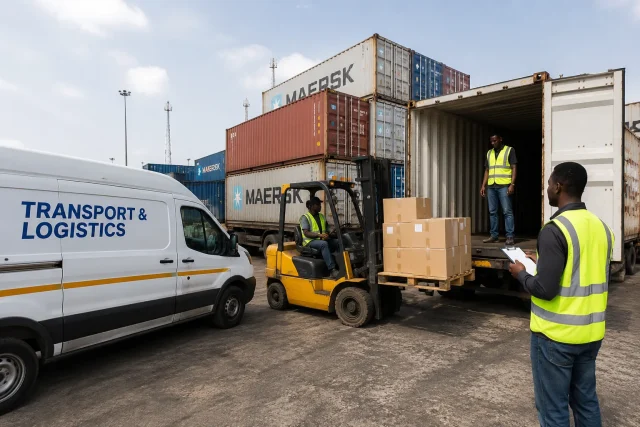
Transport and logistics experts have identified weak political commitment and poor policy implementation as major obstacles to Nigeria’s efforts to build an efficient and integrated transport system.
The experts spoke at the second edition of the Transport Summit in Lagos, themed “Navigating Global Disruption and the Road Ahead: Mobility, Energy and Trade Facilitation for a Resilient Future.”
According to industry stakeholders, Nigeria does not lack transport policies, technical expertise or development proposals. The bigger challenge is translating those plans into functioning infrastructure and services that can improve mobility, reduce logistics costs and support economic activity.
Implementation Remains the Major Challenge
Managing Principal of AZ Logistics, Dr Azeez Mustapha, said Nigeria has the capacity to develop an effective integrated transport network but lacks the political will required to consistently implement its policies.
He argued that government at all levels must move beyond policy announcements and ensure that proposed transport projects are completed and connected in ways that deliver measurable economic benefits.
Mustapha cited discussions around connecting the Lagos rail network to airports as an example of an initiative whose success will ultimately depend on sustained implementation rather than policy declarations.
Transport Policies Need Continuity
Managing Director of Expedite Movers Nigeria Limited, Olubowala Ade-Onojobi, also criticised the country’s tendency to introduce new policies without adequately implementing existing ones.
She urged authorities to concentrate on executing established frameworks rather than continuously developing new policies.
Ade-Onojobi said Nigeria could learn from the transport systems of countries such as the United Kingdom, but warned against simply importing foreign models without adapting them to Nigeria’s economic and infrastructural realities.
For businesses operating in logistics and supply chains, inconsistent policy execution can increase uncertainty, raise operating costs and make long-term investment planning more difficult.
Calls for Homegrown Transport Solutions
The Special Adviser to the Lagos State Governor on Blue Economy, Oluwadamilola Emmanuel, argued that Nigeria does not need to replicate another country’s entire transport model.
Instead, he advocated developing locally appropriate solutions by strengthening initiatives that are already working.
He cited the Lagos State Cowry Card as an example of how technology can support multimodal transport integration. The payment platform allows commuters to use a common system across boats, Bus Rapid Transit services and rail, improving connectivity between different modes of transportation.
The approach demonstrates how relatively simple digital infrastructure can help create a more seamless transport experience when different parts of the network are properly coordinated.
Poor Integration Raises Business Costs
Nigeria’s transport challenges extend beyond commuter inconvenience. Weak integration between road, rail, ports and waterways can increase the cost and time required to move people and goods.
For manufacturers, exporters, importers and logistics operators, inefficient transportation can translate into higher distribution costs, longer delivery times and reduced competitiveness.
A more integrated system could allow businesses to select the most efficient transport mode for different stages of the supply chain while reducing excessive dependence on road transportation.
This makes transport integration particularly important to Nigeria’s efforts to improve trade facilitation, industrial productivity and regional competitiveness.
Experts Seek National Transport Framework
Publisher of MMS Plus Newspaper, Kingsley Anaroke, called for Nigerian transport professionals and stakeholders to develop a practical framework for integrating the country’s transport infrastructure and services.
He said Nigeria has the human resources capable of designing an effective transport system but has not sufficiently harnessed that expertise or maintained consistent policy execution.
Anaroke pointed to the country’s Cabotage policy as an example of an initiative whose intended benefits have not been fully realised. He warned that adopting foreign models without addressing Nigeria’s specific institutional and infrastructure challenges could produce limited results.
Transport Reform Could Unlock Wider Economic Gains
The experts’ concerns point to a broader issue facing Nigeria’s infrastructure development: the gap between policy formulation and execution.
An efficient multimodal transport system could reduce logistics costs, improve movement between production centres and markets, strengthen port connectivity and support the expansion of domestic and international trade.
For Nigeria’s businesses, the priority is therefore not simply more transport policies, but consistent implementation, infrastructure connectivity, institutional coordination and long-term planning.
As the country seeks to improve productivity and attract investment, stakeholders argue that delivering existing transport projects and integrating the systems already in place may be more important than introducing another round of new policies.










Post Comment