FG Urges States to Use Bonds to Finance Infrastructure Projects
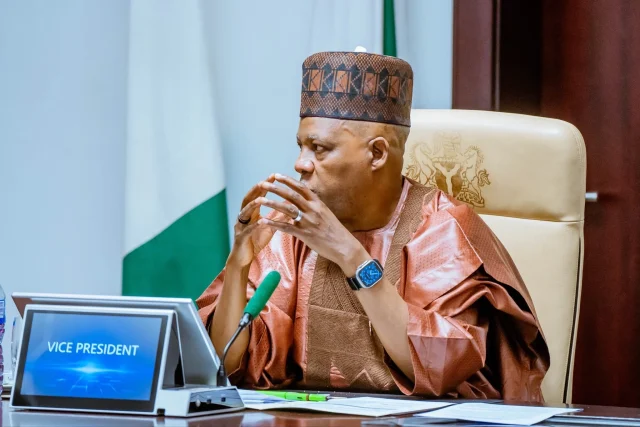
The Federal Government has urged state governments across Nigeria to explore the capital market as a source of funding for long-term infrastructure projects, saying responsibly structured bonds could help accelerate development and reduce reliance on traditional sources of financing.
Vice President Kashim Shettima made the call on Monday at the National Capital Market Conference 2026 in Abuja, where the government unveiled the Nigerian Capital Market Master Plan 2.0, a 10-year strategy designed to expand the market to ₦750 trillion by 2036.
Shettima said the Federal Government would work with state governors to encourage the responsible use of capital market financing through properly structured bonds, credible project plans and greater transparency in public spending.
According to him, the capital market can provide governments with access to long-term funds needed to develop infrastructure and support economic growth.
FG Encourages States to Explore Bond Financing
Shettima explained that state governments could use bonds to raise funds for major projects such as roads, bridges, rail transport, hospitals and other public infrastructure.
Unlike relying solely on annual budget allocations, bond financing can help governments secure funding for projects that require substantial investment over several years.
However, he stressed that states must ensure that borrowing is properly structured, supported by credible projects and managed transparently to protect public finances and maintain investor confidence.
The Federal Government also plans to work with the National Economic Council and the Securities and Exchange Commission (SEC) to guide states on responsible borrowing and the use of capital market instruments.
Nigeria Targets ₦750tn Capital Market by 2036
The Nigerian Capital Market Master Plan 2.0 aims to expand the country’s capital market from a baseline of approximately ₦250 trillion to ₦750 trillion over the next decade.
SEC Director-General Emomotimi Agama said the plan was designed to increase investor participation, introduce more investment products and strengthen the market’s regulatory framework.
The initiative is also expected to improve access to long-term financing for businesses, infrastructure projects and government development programmes.
The government believes a stronger capital market can help mobilise domestic savings and reduce excessive dependence on short-term borrowing and foreign financing.
Capital Market Records Significant Growth
Shettima said Nigeria’s capital market had recorded substantial growth since May 2023.
According to him, the Nigerian Exchange All-Share Index increased from approximately 55,000 points to more than 260,000 points, while the value of listed equities rose from around ₦30 trillion to nearly ₦160 trillion in January 2026.
He added that the combined value of the equities and bond markets had exceeded ₦217 trillion.
The Vice President attributed the growth partly to economic and financial reforms, including changes to the foreign exchange market, petrol subsidy removal, tax reforms and bank recapitalisation.
He said maintaining consistent policies and effective regulation would be important to sustaining investor confidence.
Government Plans to Expand Investment Opportunities
The master plan also seeks to encourage more Nigerians to invest in regulated financial products and help businesses raise capital locally.
As part of the initiative, the SEC announced plans for a National Savings Scheme to provide Nigerians with formal opportunities to save and invest through regulated channels.
The scheme is intended to connect domestic savings with productive investments while encouraging participation from different groups, including traders, farmers and young professionals.
Finance Minister Taiwo Oyedele also called for a more ambitious expansion of the capital market, arguing that stronger domestic investment would help finance businesses, infrastructure and the country’s wider economic development goals.
He said the government would consider incentives to encourage more private companies to list on the Nigerian Exchange and explore the listing of selected state-owned enterprises.
What Bond Financing Means for States and Businesses
Greater use of the capital market could give state governments another option for financing major infrastructure projects, particularly where immediate budget resources are insufficient.
Improved roads, transport systems, electricity infrastructure and healthcare facilities can support business activity, attract investment and create employment opportunities.
Businesses may also benefit from a deeper capital market if more investors and financial institutions provide funding for productive projects.
However, bond financing creates repayment obligations. States must assess their revenue, borrowing capacity and ability to meet interest payments before issuing bonds.
The success of the proposed approach will therefore depend on careful project selection, transparent use of funds and strong financial management.
Conclusion
The Federal Government’s call for states to use capital market bonds reflects a broader effort to mobilise long-term funding for infrastructure and economic development.
Through the Nigerian Capital Market Master Plan 2.0, the government aims to grow the market to ₦750 trillion by 2036 and expand access to investment opportunities.
For state governments, the opportunity lies in using bonds responsibly to fund projects that deliver lasting economic and social benefits without placing excessive pressure on public finances.













Post Comment