Traffic Congestion Threatens Operations at Lekki Deep Seaport
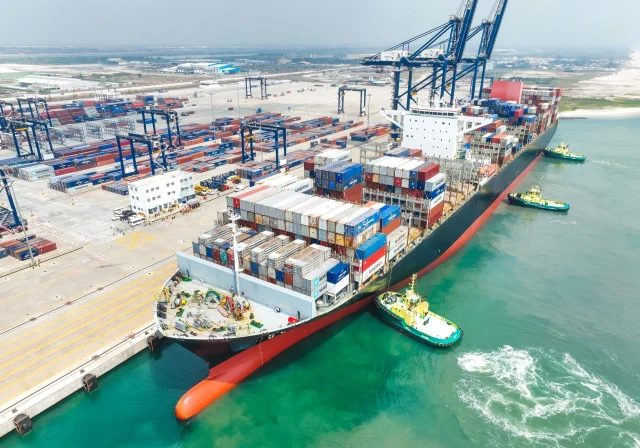
Worsening traffic congestion along the Lekki Deep Seaport corridor is beginning to disrupt port activities, raising concerns about cargo evacuation, logistics efficiency and investments in supporting infrastructure.
Stakeholders operating along the axis have blamed weak enforcement of traffic regulations for the growing gridlock, warning that prolonged congestion could undermine the efficiency of one of Nigeria’s major maritime infrastructure projects.
Although an electronic call-up system is already in place to regulate truck movements into and out of the port, stakeholders said inadequate enforcement of rules requiring truckers to use designated parks before accessing the facility remains a major challenge.
The situation has also affected investors in accredited truck parks, with operators reporting weak patronage despite committing significant capital to developing the facilities.
Truck Parks Struggle With Low Patronage
Managing Director of Lekki World, Adeola Olusodo, said efforts were underway to improve traffic flow but noted that traffic regulation falls under the responsibility of the Lagos State Government through the Lagos State Traffic Management Authority.
Truck park operators said one of the major problems is that some drivers obtain electronic call-up tickets before arriving at designated holding facilities, reducing the effectiveness of the parks in regulating truck movements.
Shile Oloto, Managing Director of Admoore Park, said bank financing had been invested in the truck park over the past three years without generating a corresponding return.
He attributed the poor utilisation of accredited parks to weak enforcement of traffic regulations along the corridor.
The situation raises wider concerns about investor confidence in logistics infrastructure if privately funded facilities established to support port operations remain underutilised.
NPA Raises Concerns Over Enforcement
Lekki Port Manager for the Nigerian Ports Authority, Emmanuel Anda, also identified weak enforcement as a major contributor to the congestion.
Anda said the NPA was not involved in designing the truck call-up system, which has affected coordination around its implementation.
He cited instances where tankers and container trucks blocked both sides of the road, severely restricting traffic movement.
Beyond the commercial impact, the unregulated movement of trucks has also created safety concerns.
Anda said multiple fatal road accidents had resulted from the situation and warned that further casualties could occur without improved traffic management.
The high level of commercial activity within the Lekki Free Trade Zone makes an effective traffic-management system increasingly important for maintaining uninterrupted movement along the corridor.
Lagos Government Acknowledges Congestion
Lagos State Commissioner for Transportation Seun Osiyemi acknowledged the congestion but said the situation was not permanent.
According to the commissioner, traffic volumes sometimes increase following rumours of impending petroleum product price increases, prompting truck drivers to rush towards the port and surrounding facilities to load products before potential price changes.
Osiyemi said the state government was committed to enforcing traffic regulations while attempting to avoid measures that could unnecessarily disrupt commercial activities.
During periods of unusually heavy truck movements, authorities redirect vehicles to designated parks to ease congestion along the corridor, he said.
The Federal Road Safety Corps has also deployed personnel along the coastal road leading towards the port and refinery to support traffic management.
Lagos Plans Stronger E-Call-Up Enforcement
The Lagos State Government has indicated that it will intensify enforcement along the Lekki Port and Apapa corridors following an assessment of existing traffic-management arrangements.
At a strategy meeting involving transportation officials, gaps were identified in the current enforcement system, prompting plans to revise the approach.
The government plans to deploy additional traffic-management personnel to the Lekki Port corridor to strengthen compliance with the electronic call-up system and improve the movement of articulated trucks.
Improved enforcement could be critical as commercial activities around the Lekki axis continue to expand.
Congestion Poses Risk to Port Efficiency
Efficient road access is an important part of port competitiveness because delays in moving containers and other cargo away from terminals can increase logistics costs and reduce supply-chain reliability.
For Lekki Deep Seaport, persistent congestion could weaken some of the efficiency gains expected from the development of modern port infrastructure if cargo cannot move seamlessly between the terminal and businesses across the country.
The challenge also extends beyond the port itself. The Lekki corridor hosts a growing concentration of industrial and logistics assets, meaning increased truck movements are likely to place further pressure on available transport infrastructure.
Effective implementation of the electronic call-up system, greater utilisation of designated truck parks and stronger coordination among the Lagos State Government, NPA, port operators and logistics companies could therefore become increasingly important as activity along the corridor expands.
For investors in the port and surrounding logistics infrastructure, resolving the congestion will be important not only for improving traffic flow but also for ensuring that investments in truck parks and other supporting facilities remain commercially viable.










Post Comment