Tinubu declares end to raw cocoa exports, unveils plan for local processing
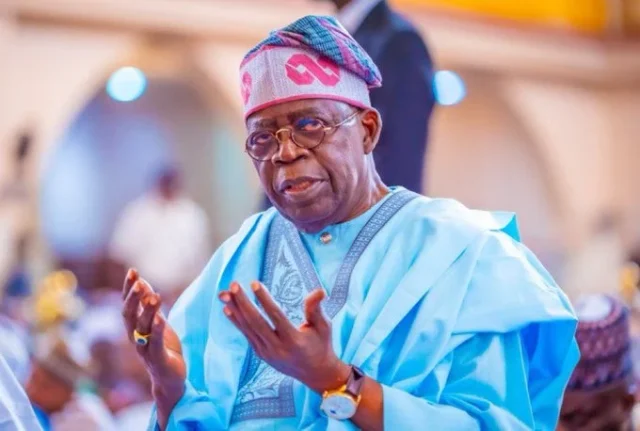
President Bola Tinubu on Tuesday declared that Nigeria would no longer export raw cocoa beans while importing finished chocolate products, unveiling an ambitious plan to transform the country’s cocoa industry through local processing, industrialisation and value addition.
Represented by the Minister of Agriculture and Food Security, Senator Abubakar Kyari, at the Cocoa Value Addition Summit 2026 in Abuja, the President said the era of exporting raw agricultural commodities without capturing their full economic value must end, as Nigeria seeks to create jobs, attract investments and earn more foreign exchange from cocoa.
The summit, themed “From Bean to Brand: The Bean in My Hand, The Brand in Our Future,” brought together ministers, governors, development partners, financiers, cocoa-producing countries and investors to launch a new roadmap for Africa’s cocoa industry.
Tinubu said although Africa produces about 70 per cent of the world’s cocoa, the continent earns only a tiny fraction of the over $130bn global chocolate industry because most processing, branding and manufacturing take place overseas.
He said, “Seven of every ten cocoa pods on this earth ripen under the African sun. They are grown by African hands on African soil with African knowledge passed down through generations, and yet of a global chocolate economy now valued at well over $130bn and by some recent estimates approaching $165bn.
“Nigeria will no longer export raw beans while importing finished value. We will ground our beans at home, we will press our butter at home, we will make our chocolate at home, brand it at home and sell it to the world on our own terms.
“And let no one mistake this for rhetoric. The proof is already rising out of the ground. At Sagamu, Nigerian investors are building a 70,000-ton processing facility, the largest this nation has ever seen. Our national grinding capacity has crossed 120,000 tons a year, and it’s growing. The Bank of Industry stands ready as a co-convener of this summit, with capital prepared for deployment into bankable projects.”
The President noted that more than 300,000 Nigerian farming families cultivate cocoa across over 1.4 million hectares, making the country one of the world’s leading producers with about six to seven per cent of global output.
He added that cocoa generated more than N3tn in export earnings when global prices exceeded $10,000 per tonne, contributing almost a quarter of Nigeria’s non-oil exports, but warned that the country could no longer depend on exporting raw beans.
He added, “There has never been a moment when processing of origin made more commercial sense than it does today. Nigeria is not asking for charity. Nigeria is offering the best open position in the global food economy. We are open for business, and we are serious.
“Take it to our farmers, the true owners of this crop. I make a promise, and I make it in the name of the Federal Republic of Nigeria. Value addition is not a project to be done around you. It is a covenant to be kept with you. For a century, the reward of this harvest has been far from the hands that raise it.”
Driving the government’s industrial agenda, the Minister of State for Industry, Senator John Owan Enoh, said the summit represented a major step in implementing President Tinubu’s Nigerian Industrial Policy, which seeks to increase domestic manufacturing and reduce dependence on raw commodity exports.
Enoh said Nigeria’s ambition was no longer to celebrate the volume of cocoa exported but the value created before the commodity leaves the country.
“We are not interested in exporting anonymous sacks anymore. We are interested in exporting value. If Nigeria truly wants to build a one-trillion-dollar economy, it cannot continue exporting raw materials while other countries earn the real wealth from processing and branding them,” he said.
The minister, who recounted his childhood experience growing up on cocoa farms in Cross River State, said the summit was deeply personal because generations of cocoa farmers had laboured for decades without enjoying the true value of their produce.
He lamented that although Cross River remains one of Nigeria’s leading cocoa-producing states, it still lacks a major cocoa processing plant decades after commercial cultivation began.










Post Comment