Nigerian Stock Market Loses ₦3.28 Trillion as Heavy Selling Hits Dangote Cement and Other Major Stocks
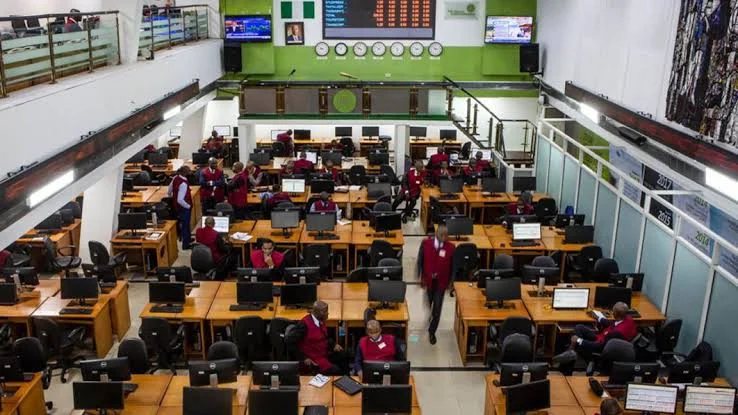
Investors on the Nigerian Exchange experienced a significant market downturn as the total value of listed equities declined by approximately ₦3.28 trillion during Thursday’s trading session, reflecting increased selling pressure across major stocks.
According to market data reported by Punch Newspapers on November 6, 2026, the Nigerian Exchange Limited closed the previous trading session with market capitalisation falling to ₦162.13 trillion.
The benchmark NGX All-Share Index declined by 1.98%, closing at 249,710.59 points compared with 254,762.81 points in the preceding session.
The decline was driven largely by sharp losses in several highly valued companies.
Dangote Cement and Presco Lead Market Decline
Dangote Cement Plc and Presco Plc were among the worst-performing stocks, with both companies recording the maximum daily price decline of 10%.
Dangote Cement’s share price fell from ₦1,490 to ₦1,341, while Presco declined from ₦1,840.80 to ₦1,656.80.
Other companies also experienced substantial losses.
Wapic Insurance dropped by 9.91% to close at ₦2 per share, while UACN declined by 7.85% to ₦166.80.
These movements contributed to the overall reduction in the market’s capitalisation.
The industrial sector was particularly affected, with the NGX Industrial Index falling by 7.14%.
Some Stocks Recorded Gains Despite the Decline
Although the broader market closed lower, several companies attracted buying interest.
CWG Plc led the gainers with a 9.94% increase, closing at ₦17.15 per share.
Abbey Mortgage Bank gained 9.84%, while Honeywell Flour Mills advanced by 9.82%.
These gains demonstrate that individual stocks can perform differently from the wider market, even during periods of significant selling pressure.
What Does the ₦3.28 Trillion Loss Mean?
A reduction in stock market capitalisation reflects a decline in the market value of listed companies based on their prevailing share prices.
It does not mean that ₦3.28 trillion in cash physically left the market during the trading session.
For individual investors, falling share prices may reduce the market value of their investment portfolios.
However, market declines can also create opportunities for investors who identify financially strong businesses trading at attractive valuations.
Such opportunities must be evaluated carefully because falling prices may continue declining.
Implications for Businesses and Investors
A weaker stock market can affect investor confidence and influence how companies plan to raise capital.
Businesses considering new share offerings may face greater difficulty attracting investors when market sentiment is negative.
For existing shareholders, attention may increasingly shift towards corporate earnings, dividend prospects, financial performance and broader economic conditions.
The Bigger Picture
The latest downturn highlights the volatility that can accompany investment in equities.
While the Nigerian stock market has attracted significant investor participation, short-term price movements remain influenced by corporate performance, investor sentiment and economic expectations.
For investors, diversification, careful financial analysis and a long-term perspective remain important when navigating periods of market uncertainty.













Post Comment