NCCC advocates gas as bridge fuel for Africa

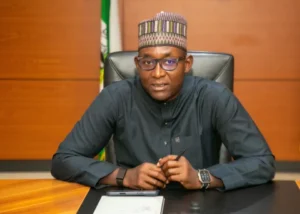
The Director-General of the National Council on Climate Change, Majekodunmi Omotenioye, has said Africa must adopt a pragmatic energy transition strategy that utilises natural gas as a bridge fuel to drive industrialisation while aligning with global climate commitments.
Omotenioye said this in her keynote address at the just-concluded three-day Green Conference 2026 organised by Greenplinth Africa in Lagos.
The conference, themed ‘Decarbonising Africa: Pathway to Climate Finance, Sustainable Growth and Green Economy’, brought together policymakers, climate experts, state governments, and development partners to deliberate on strategies for balancing economic growth with environmental sustainability across the continent.
According to a statement on Sunday, Omotenioye noted that Africa faces a unique challenge of pursuing rapid industrial growth while simultaneously reducing carbon emissions — a transition that developed economies did not confront during their own industrialisation.
“Africa stands at a pivotal moment in the history of global development. Ours is the youngest continent on earth, rich in resources, innovation, and human potential, yet hundreds of millions still live without reliable access to modern energy.
“The real question before us is not whether Africa should decarbonise. That objective is already clear and widely shared. The question is how Africa can achieve industrial growth, energy security, and economic prosperity while advancing the global climate agenda,” she said.
According to her, replacing coal and heavy fuel oil with natural gas could reduce greenhouse gas emissions by as much as 50 per cent, while also improving air quality.
“With over 600 trillion cubic feet of proven gas reserves, Nigeria has the resources to support industrial growth while contributing to global climate objectives,” Omotenioye added.
The NCCC boss also disclosed that Nigeria recently launched a national framework aimed at decarbonising the country’s oil and gas value chain, covering upstream, midstream, and downstream operations.
Speaking at the event, the Deputy Governor of Benue State, Sam Ode, said sub-national governments must play a central role in Nigeria’s transition to a low-carbon economy, noting that decarbonisation has become an urgent global priority.
“The essence is to ensure that the poorest and most vulnerable people in rural areas become the major beneficiaries of clean energy access,” he said, while calling on investors and development partners to see Benue as “a frontier for green opportunity.”
Meanwhile, Niger State emerged as the second sub-national government, after Benue State, to sign a clean energy agreement with Greenplinth Africa at the conference.
Speaking on the development, the Commissioner for Environment and Climate Change in Niger State, Abubakar Musa, alongside the Director-General of the Niger State Agency for Green Initiatives, Daniel Galadima, reiterated the state’s commitment to environmental sustainability and climate action.
“This project has come in to solve the issue of poverty, increase revenue for families, and help us tackle climate challenges,” Musa said.
Also speaking, Muhammed Gudi, who represented the Nasarawa State Government, said the state was ready to support the initiative through land provision and policy backing.
“His Excellency is happy and thrilled to see that the state is fully engaged in decarbonisation initiatives. Nasarawa State is very ready to key into this programme because it will address climate issues and create employment opportunities for our people,” he said.
In recognition of its early commitment to the initiative, the Lagos State Government was also honoured by Greenplinth Africa as the first sub-national government to sign a memorandum of understanding with the organisation.






Post Comment