Nigerian Stock Market Drops 2.13% as Investors Turn Cautious Amid Economic Uncertainty
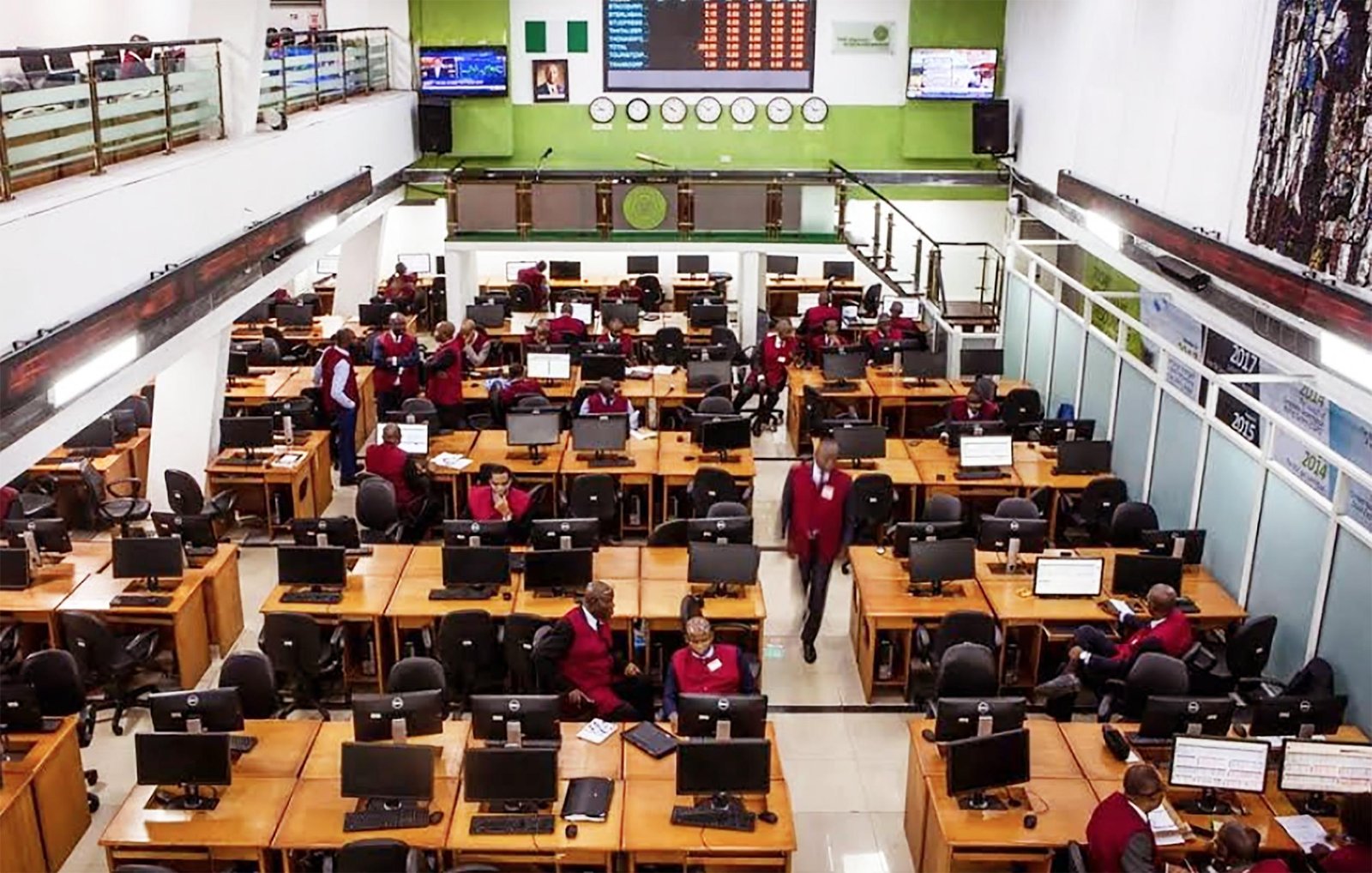
The Nigerian stock market recorded a difficult trading week as the Nigerian Exchange All-Share Index declined by 2.13%, reflecting widespread selling pressure and cautious investor sentiment.
According to a market report published by Punch Newspapers on November 9, 2026, the benchmark index closed the week ended November 6 at 248,877.22 points.
Total market capitalisation also declined by 2.13%, finishing the week at approximately ₦161.59 trillion.
The downturn affected several sectors as investors reassessed market conditions and the performance of listed companies.
Trading Activity Declines
During the review week, investors traded approximately 2.829 billion shares worth ₦208.407 billion across 192,158 transactions.
This represented a substantial reduction in trading volume and value compared with the preceding week.
In the previous period, the market recorded approximately 7.619 billion shares valued at ₦637.826 billion.
The financial services sector accounted for the largest share of trading activity.
It contributed about 1.983 billion shares worth ₦126.627 billion, representing approximately 70% of total equity trading volume.
The consumer goods and agricultural sectors followed in transaction volume.
Major Stocks Record Mixed Performances
Despite the general market decline, some companies recorded substantial gains.
Honeywell Flour Mills led the gainers with a 30.82% increase, closing at ₦29.50 per share.
Transcorp Power followed with a 23.37% gain, while e-Tranzact International rose by 14.42%.
However, several companies experienced significant price declines.
Vitafoam Nigeria recorded the largest weekly loss, falling by 18.96%.
Sovereign Trust Insurance dropped by 17.02%, while Eterna declined by 15.79%.
Overall, 57 stocks recorded price declines, compared with 29 that appreciated.
Sector Performance Reflects Wider Caution
The bearish trend extended across several market indices.
The NGX Industrial Goods Index declined by 4.35%, while the Banking Index dropped by 2.45%.
The NGX Premium Index also fell by 3.88%.
However, the Growth Index recorded a 1.33% increase, showing that some market segments continued to attract buying interest.
These differences illustrate how individual sectors and companies can respond differently to changing market conditions.
What This Means for Nigerian Investors
Falling stock prices can reduce the market value of investment portfolios and encourage investors to review their holdings.
However, a reduction in market capitalisation is a valuation change, not necessarily an equivalent amount of cash withdrawn from the market.
For investors with long-term investment objectives, periods of market weakness may provide opportunities to examine companies with strong financial fundamentals.
Nevertheless, buying shares solely because their prices have fallen can expose investors to additional losses.
Careful attention to company earnings, valuation, dividends and financial stability remains essential.
The Bigger Picture
The latest market decline highlights the sensitivity of Nigeria’s capital market to investor expectations and economic conditions.
Although some companies continued to record gains, the broader decline indicates a cautious investment environment.
Future market performance will likely depend on corporate earnings, monetary conditions, investor liquidity and confidence in Nigeria’s economic outlook.









Post Comment