Nigeria Spends ₦7.7 Trillion on Debt Interest as Payments Exceed Revenue
Meta Description: Nigeria spent ₦7.7 trillion on debt interest in the first half of 2026, exceeding federal revenue by 124.2%, according to the World Bank.
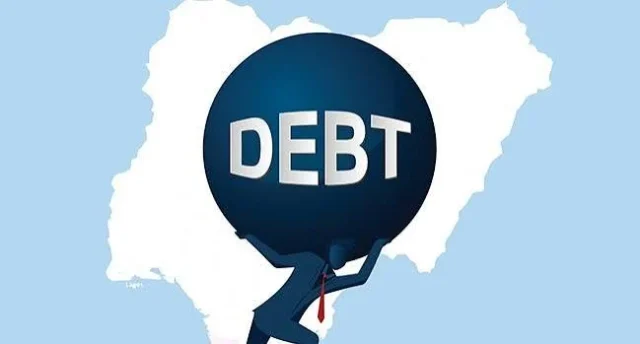
Nigeria’s Federal Government spent ₦7.7 trillion on interest payments between January and June 2026, exceeding its total revenue of ₦6.2 trillion by ₦1.5 trillion, according to the World Bank.
The figures, reported by Punch Newspapers on October 12, 2026, highlight the pressure that rising debt costs continue to place on the country’s public finances.
The findings were contained in the World Bank’s October 2026 Nigeria Development Update, titled Beyond the Federal Purse: How Higher Revenues Shaped State Priorities.
Although government revenue improved compared with the previous year, the cost of servicing existing debt remained higher than the money collected during the six-month period.
Debt Interest Payments Rise by 37.5%
The World Bank report showed that federal government interest payments increased from ₦5.6 trillion in the first half of 2025 to ₦7.7 trillion in the corresponding period of 2026.
This represents an increase of ₦2.1 trillion, or 37.5 per cent, largely driven by high domestic borrowing costs.
However, the proportion of revenue spent on interest payments improved from approximately 155.6 per cent in the first half of 2025 to 124.2 per cent in the first half of 2026.
The improvement was supported by stronger revenue collection, but interest payments still exceeded total federal revenue.
Government Revenue Records Significant Growth
Federal Government revenue increased from ₦3.6 trillion in the first half of 2025 to ₦6.2 trillion in the same period of 2026, representing a 72.2 per cent increase.
According to the World Bank, the growth was supported by improved oil receipts, stronger corporate tax collections and higher independent revenues.
Despite this progress, government spending also increased. Total federal expenditure rose from ₦14.6 trillion to ₦16.1 trillion during the same period.
This means that higher revenue alone has not been enough to ease the pressure on public finances.
Capital Spending Faces Pressure
One major concern highlighted by the report is the limited amount of money available for infrastructure and other development projects.
Reported federal capital expenditure fell from about one per cent of gross domestic product in the first half of 2025 to 0.3 per cent in the first half of 2026, equivalent to approximately ₦700 billion.
The government spent about 11 times more on interest payments than on reported capital projects during the six-month period.
Interest and personnel costs combined reached ₦11.9 trillion, accounting for approximately 73.9 per cent of total federal expenditure.
The World Bank cautioned that the improvement in the government’s fiscal position should be treated carefully because low capital spending contributed to the reported outcome.
Nigeria’s Public Debt Continues to Grow
The report estimated Nigeria’s public debt at approximately ₦177 trillion in 2025, equivalent to 40 per cent of GDP. This compares with ₦67 trillion, or 27.6 per cent of GDP, in 2021.
The increase was partly attributed to exchange-rate valuation effects and the recognition of previously accumulated liabilities.
Domestic debt accounted for 57.9 per cent of Nigeria’s debt stock but generated 72.6 per cent of interest payments in 2025. This reflects the relatively high cost of borrowing within the domestic market.
The World Bank recommended reducing expensive borrowing, prioritising concessional financing and extending debt maturities to reduce refinancing risks.
What Does This Mean for Nigerian Businesses?
Rising debt interest payments can affect businesses through several channels.
1. Less funding for infrastructure: When a large share of government revenue goes towards debt interest, fewer resources may be available for roads, electricity, transport and other infrastructure that businesses depend on.
2. Higher borrowing costs: Heavy government borrowing in the domestic market can contribute to competition for available funds and put pressure on lending rates, although the effect depends on wider economic conditions.
3. Pressure on economic growth: Limited public investment can affect productivity, business expansion and job creation over time.
4. Greater uncertainty for investors: Businesses planning long-term investments need to consider government finances, interest rates, inflation and the broader economic outlook.
For small businesses, these pressures can make access to affordable credit and reliable infrastructure particularly important.
World Bank Calls for Better Fiscal Management
The World Bank projected that Nigeria’s consolidated fiscal deficit would increase from 3.1 per cent of GDP in 2025 to 3.5 per cent in 2026, partly due to rising interest payments, personnel costs and pre-election spending.
The institution urged the government to improve revenue mobilisation, strengthen budget planning and maintain fiscal discipline.
These measures could help reduce the pressure on public finances and create more room for productive investment.
Conclusion
Nigeria’s rising debt interest payments show the challenge of turning increased government revenue into funds available for development.
Although revenue collection improved significantly in the first half of 2026, interest obligations continued to exceed federal earnings.
For businesses and investors, the key issue is how effectively the government can manage borrowing costs while protecting spending on infrastructure, public services and economic development.
Source: Punch Newspapers, citing the World Bank’s October 2026 Nigeria Development Update.









Post Comment