‘Generation, transmission faults trigger nationwide blackouts’
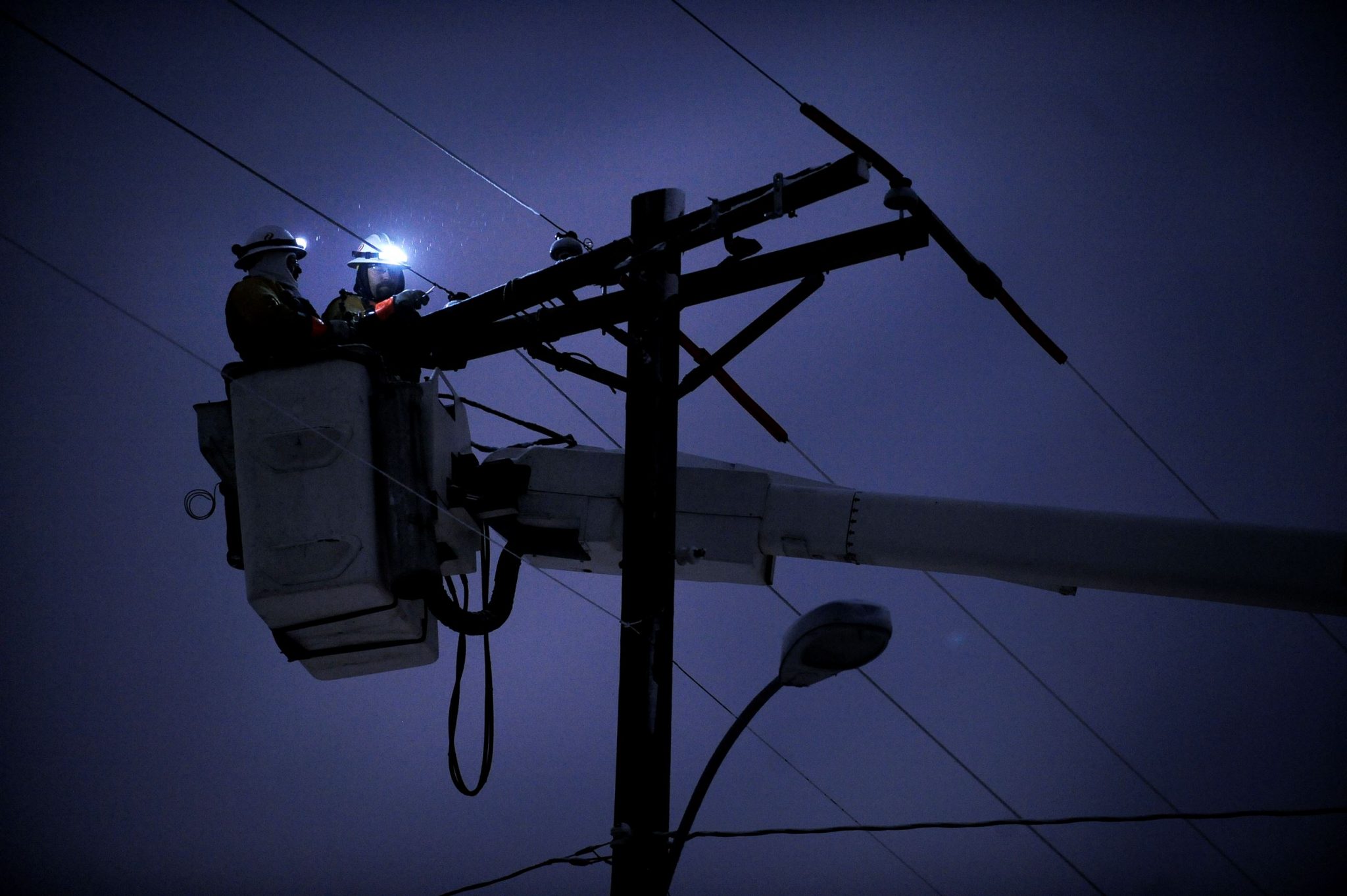
Recurring collapses of Nigeria’s national grid have remained one of the most persistent challenges in the country’s electricity sector, often plunging homes, businesses and industries into darkness and sparking widespread public frustration, DARE OLAWIN reports
As concerns continue to mount over the stability of the power system, the Nigerian Independent System Operator has shed more light on the technical factors responsible for the disturbances, linking them to failures across the generation, transmission and distribution chain.
The Nigerian Independent System Operator attributed recurring grid collapses in the country to faults across the generation, transmission and distribution segments of the power sector.
NISO’s Managing Director and Chief Executive Officer, Abdu Mohammed, speaking during a virtual interaction with energy correspondents, media organisations and professionals across Nigeria, including heads of corporate communications departments from power distribution companies, explained that system collapses could occur at any point in the power value chain.
“These disruptions can occur at any point in the power value chain, whether generation, transmission, or distribution. However, NISO is committed to immediate response measures to ensure swift restoration to normal operations whenever such issues arise,” he said.
He explained that the Nigerian Independent System Operator oversees the management and stabilisation of the national grid, which comprises interconnected high-voltage transmission lines, substations and other equipment across the country.
According to him, the grid frequency serves as an indicator of the balance between electricity demand and supply, reflecting the power dispatched from generation companies to consumers through the transmission system.
“Frequency is measured in hertz, with the grid code stipulating that the nominal operating frequency is 50 Hz. For example, at any given point in time, the system operator manages to balance the system frequency through balancing of supply (generation) and demand (consumption), maintaining a balanced system within a frequency of 50 Hz ± 2.5 per cent. However, such perfect balancing is an extremely difficult activity, most especially with largely manual system operation and low system visibility,” he added.
Nigeria’s electricity grid has suffered repeated collapses over the years, highlighting deep-rooted weaknesses in the country’s power infrastructure despite several reforms and investments in the sector.
Investigations by The PUNCH showed that the national grid collapsed about 105 times within 10 years under the administrations of former President Muhammadu Buhari and President Bola Tinubu despite billions of dollars in loans and interventions targeted at improving electricity infrastructure.
According to findings, Buhari’s administration recorded about 93 grid collapses between 2015 and May 2023, while the Tinubu administration recorded multiple collapses between 2023 and 2024.
It was also gathered that the national grid suffered 97 collapses between November 2013 and January 2019 following the privatisation of the power sector.
Data obtained from the Transmission Company of Nigeria showed that the incidents comprised 73 total collapses and 24 partial collapses.
The situation continued in 2024 as the country recorded repeated nationwide blackouts.
One of the major incidents occurred on 19 October 2024, when the national grid suffered a major disturbance that plunged several parts of the country into darkness.
Days later, another collapse occurred, sparking renewed concerns over the stability of the transmission network.
In September 2024, it was also reported that the Nigerian Electricity Regulatory Commission recorded 183 grid disturbances between 2011 and 2023, attributing many of the failures to ageing power plants, weak maintenance culture, inadequate spinning reserves and persistent operational challenges in the sector.
Although the frequency of collapses appeared to decline slightly between 2020 and 2023, incidents persisted into 2025 and 2026, sustaining concerns among electricity consumers, manufacturers and operators over the fragility of the national grid.
The grid crumbled twice in January 2026, plunging millions into darkness and exposing the deep rot that defines the power sector.
Power generation had collapsed from 3,825MW to a miserable 39MW within minutes.
NISO described it as a “system-wide disturbance” that caused a total outage across the interconnected network.
The grid collapsed three times in less than a month, from 29 December 2025 to 27 January 2026.
NISO said one of the incidents was caused by the simultaneous tripping of multiple 330kV transmission lines and the disconnection of some generating units from the grid.
At the recent media engagement, the NISO boss stated that the Nigerian national grid was designed to operate within a frequency range with an upper limit of 51.25Hz and a lower limit of 48.75Hz.
“As explained, the Nigerian national grid is designed to operate within a specific frequency range: an upper limit of 51.25Hz and a lower limit of 48.75Hz. The role of NISO is to ensure that fluctuations stay within these boundaries. Any substantial deviation beyond these limits, whether above or below, runs the risk of triggering a national grid collapse,” he noted.
The organisation stated that a system collapse could be either total or partial, adding, “A total system collapse or total grid failure occurs when generation capacity falls to zero megawatts, leading to a nationwide power supply shutdown across the interconnected national grid. Partial system collapse, on the other hand, involves localised disturbances impacting only a part of the grid. These issues often stem from voltage and frequency instabilities, such as cascading failures initiated by generation tripping, transmission line tripping, or distribution line tripping. Either of these or both can trigger total system collapse or partial collapse depending on the magnitude or severity of load loss.”
He further explained that grid disturbances or instability could manifest as frequency fluctuations or rapid load drops, which might not always result in a collapse.
During the engagement, Mohammed also stressed the need for accurate and transparent communication with the public to prevent unnecessary panic during disruptions in the power sector.
He raised concerns about misleading headlines and inaccurate reports concerning the organisation and the power sector, calling on journalists to confirm information with NISO before publishing.
The NISO boss also pledged regular engagement with the media and promised training sessions to deepen journalists’ understanding of the organisation’s operations and the power sector generally.
Meanwhile, the recurring instability of Nigeria’s national grid continues to expose the fragility of the country’s electricity infrastructure, even as operators insist that corrective measures are constantly being deployed to restore supply whenever disruptions occur.
For NISO, the latest engagement with the media underscores a broader attempt to improve transparency, strengthen public understanding of grid operations and reduce misinformation around system failures.
The operator maintains that collapses are largely triggered by imbalances across generation, transmission and distribution, compounded by technical limitations such as manual operations and limited system visibility.
While the agency continues to explain the technical realities behind grid performance and the narrow frequency band within which the system must operate, the persistence of disturbances keeps public attention fixed on the same question: how quickly can Nigeria move from repeated collapses to sustained grid stability?
For now, NISO’s assurances of faster communication, deeper stakeholder engagement and capacity-building for energy reporters signal an effort to bridge the information gap as the power sector continues to grapple with recurring system shocks.









Post Comment