Nigeria’s Capital Challenge Is Finding Bankable Opportunities
Nigeria’s investment challenge is not necessarily a shortage of capital, but a lack of sufficiently structured and bankable opportunities capable of attracting and absorbing available funds, experts have said.
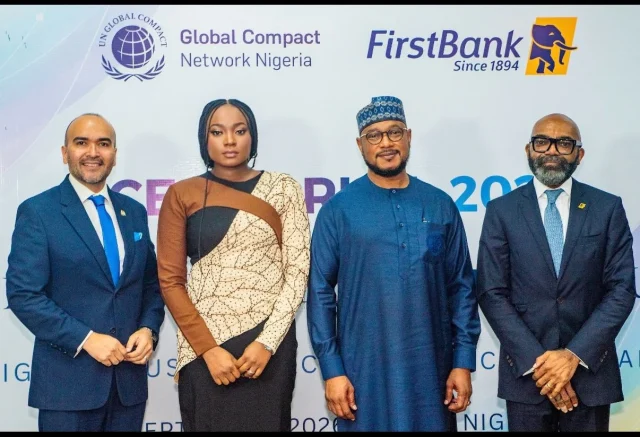
The experts spoke at the 2026 Chief Executive Officer Forum of the UN Global Compact Network Nigeria, held in Lagos under the theme, “Financing a Dignified Future: Aligning Capital, Policy and Business Action.”
The closed-door forum brought together chief executives, policymakers, financiers and development partners to discuss how stronger alignment between capital, public policy and private enterprise could unlock investment and improve economic productivity.
In her opening remarks, the CEO and Executive Director of UN Global Compact Network Nigeria, Naomi Nwokolo, urged business leaders to move beyond repeatedly highlighting long-standing economic constraints and focus on practical solutions that can strengthen competitiveness, support living wages and promote sustainable growth.
She emphasised the need for businesses and policymakers to translate discussions around investment and development into concrete actions capable of delivering measurable economic outcomes.
The Director-General of the Northwest Governors Forum, Maryam Musa Yahaya, also stressed the importance of greater engagement between state governments and investors.
According to her, governments must work directly with investors to identify and address structural barriers that continue to discourage investment, particularly challenges relating to electricity supply, regulatory processes and security.
Zamfara State Governor, Dauda Lawal, highlighted his administration’s 10-year development plan as an example of efforts to create a more predictable environment for investment.
The plan focuses on improving policy consistency, strengthening geophysical data and expanding the state’s revenue base. Lawal said internally generated revenue had increased from about N90 million to approximately N45 billion monthly.
Financial Inclusion and SME Readiness
The Deputy Managing Director of First Bank of Nigeria, Ini Ebong, said financial inclusion should increasingly be viewed as critical economic infrastructure rather than simply a corporate social responsibility initiative.
He noted that one of the major obstacles to expanding access to finance is the limited ability of many small businesses to meet the requirements of formal financing.
Improved record-keeping, stronger corporate governance and better business structures, he argued, would help more small and medium-sized enterprises become financeable and capable of attracting institutional capital.
Pension Funds Seek Bankable Infrastructure Projects
The Group Chief Operating Officer of Custodian Investment, Adeniyi Falade, pointed to the Nigerian pension industry as an example of the gap between available capital and investable opportunities.
According to Falade, less than three per cent of the pension industry’s N32 trillion asset pool is allocated to infrastructure, largely because of a shortage of properly structured and bankable projects.
The figures highlight a broader challenge for Nigeria: large pools of domestic capital may be available, but investors require projects with clear commercial structures, credible data and manageable risk before committing funds.
Energy Investment Requires Clearer Frameworks
Managing Director of Sahara Power Group, Anthony Youdeowei, said Nigeria’s energy deficit would also require significant investment, particularly in electricity distribution infrastructure.
However, attracting the scale of capital required would depend on establishing transparent and sustainable tariff frameworks that provide investors with greater certainty over potential returns.
Such frameworks could help improve investor confidence while enabling operators to raise the capital needed to strengthen electricity infrastructure and service delivery.
Global Capital Remains Selective
Providing an international trade perspective, Canada’s Deputy High Commissioner to Nigeria, Carlos Rojas-Arbulú, said bilateral merchandise trade between Nigeria and Canada had surpassed $3 billion.
Despite Nigeria’s economic potential, he noted that international investors remain highly selective when deciding where to deploy capital.
Investors increasingly prioritise transparent data, credible feasibility studies and clearly structured projects rather than relying solely on the size or potential of a market.
The discussions at the forum underscored a central message: unlocking greater investment in Nigeria will require more than simply identifying available sources of capital.
Businesses and governments will need to develop commercially viable projects, improve transparency, strengthen governance and create predictable policy environments that give investors greater confidence to commit funds.
For Nigeria, the opportunity therefore lies not only in attracting more capital, but in building a stronger pipeline of credible, investment-ready projects capable of converting available capital into productive economic growth.








Post Comment