US-Iran crisis: 94 countries subsidise fuel as Nigerians pay more
As countries around the world adopt fuel subsidies and other palliative measures to cushion the impact of the US-Iran war and the closure of the Strait of Hormuz, Nigerians have continued to bear the brunt of rising petrol and diesel prices, even as energy economists and industry stakeholders call for targeted interventions to ease the pressure on households and businesses.
The International Energy Agency disclosed that more than 115 countries had introduced measures to respond to the energy shock, including energy conservation, price support and structural policies aimed at reducing fuel consumption.
Of these, 94 governments had introduced price-support measures, including fuel subsidies, price caps and tax interventions, while 58 had adopted energy conservation measures and 30 had announced longer-term structural policies to reduce fuel use.
The measures came as the disruption of energy flows through the Strait of Hormuz, one of the world’s most important oil and gas shipping routes, sent shock waves through global energy markets.
For Nigeria, the impact has been felt through higher petrol prices, with pump prices rising above N1,300/litre in parts of the country before subsiding to N1,200, while the increase in energy costs has also pushed up transportation, food and business operating costs.
The IEA’s head of analysis for its Office of Energy Efficiency and Inclusive Transitions, Jérôme Bilodeau, said demand-side measures could not replace the enormous volume of energy normally transported through the Strait of Hormuz but could moderate the impact of the disruption.
“Demand-side measures are not enough to replace the sheer size of energy that’s transiting through that strait, but it can dampen and moderate the impact,” Bilodeau said during a webinar hosted by the Centre for Strategic and International Studies.
He said 58 governments had introduced energy conservation measures since the war began, mainly targeting oil consumption through reduced private transportation fuel use, working or studying from home, reduced government travel and adjustments to cooling temperature settings.
Bilodeau, speaking at a webinar reported by S&P Global Energy, said 94 governments had also introduced price supports such as fuel subsidies, price caps and tax measures.
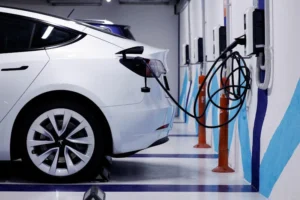
Japan and South Korea, he said, had introduced price caps and fuel subsidies, while Vietnam lowered taxes on electric vehicles and India was promoting electric stoves.
The IEA official said 30 governments had also announced structural policies to reduce fuel consumption over the longer term, including energy efficiency programmes, electrification plans and renewable energy incentives.
In Nigeria, however, energy economists and industry groups have called for targeted measures to cushion consumers from the impact of the energy shock.
A former President of the Nigerian Association of Energy Economics, Prof Adeola Adenikinju, urged the Federal Government to use part of the additional revenue generated from higher crude prices to support vulnerable Nigerians.
“This is the time that Nigeria should say, ‘Look, we are sending some cash to those poor people who are vulnerable,’” Adenikinju said.
He said rising petrol prices had increased transportation costs and worsened inflation, stressing that support should extend beyond civil servants to Nigerians in the informal and private sectors.
The Petroleum Products Retail Outlets Owners Association of Nigeria also urged the government to deploy measures to reduce transportation costs and prevent higher fuel prices from worsening food inflation.
PETROAN National President, Billy Gillis-Harry, said the government should return some of the gains from higher crude prices to Nigerians.
The Independent Petroleum Marketers Association of Nigeria also called for a reduction in taxes and charges imposed on petroleum products, arguing that this would help moderate pump prices.
IPMAN spokesman, Chinedu Ukadike, said charges imposed by agencies including the Nigerian Maritime Administration and Safety Agency, Nigerian Ports Authority and Nigerian Midstream and Downstream Petroleum Regulatory Authority should be reviewed.
“The government should cut down some of these taxes, especially the NIMASA taxes and the rest of them. It will help in bringing down the price of petroleum products,” he said.
He also called for the rehabilitation of petroleum pipelines to reduce the cost of transporting petroleum products by road, as well as the acceleration of CNG vehicle conversion.








Post Comment