West Africa needs regional energy market to unlock $3tn wealth — Expert
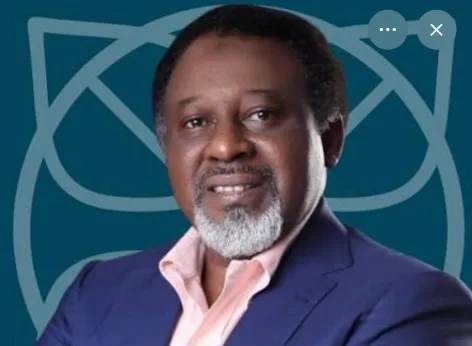
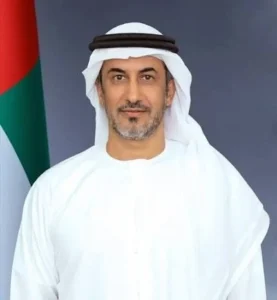
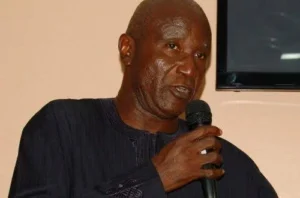
West Africa could build a $3tn cumulative energy market by 2035 if its 16 countries move from operating as separate national markets to a connected regional system, the Chairman of Rosehill Group Limited Advisory Limited, Suleiman Yahyah, has said.
Yahyah said the region could accelerate the development of its energy market by building interconnected systems rather than pursuing isolated projects, with common product specifications, shared data standards, regional infrastructure and a unified dispute resolution mechanism.
He made the proposal on Wednesday at the second West Africa Refined Fuel Market Conference in Abuja, where regulators, refiners, traders, financiers and other energy stakeholders are meeting to develop a transparent regional pricing system for refined petroleum products.
The conference was jointly hosted by the Nigerian Midstream and Downstream Petroleum Regulatory Authority, S&P Global Commodity Insights and the West Africa Regulators Forum.
The two-day event was themed, “Funding West Africa Infrastructure & Distribution to Create a Transparent Market for Regional Price Benchmarks.”
Yahyah, in his keynote presentation, said West Africa had reached a critical point in the evolution of its energy market, particularly following major investments in refining and changes in global energy markets.
He argued that the region could no longer be described merely as an emerging market with huge potential because developments in refining and energy infrastructure were beginning to change the structure of the market.
He stated, “Once upon a time, a few months ago, this market was full of potential. But a couple of months have changed the dynamics, and we are now managing six steps for emerging markets in the energy platforms.
“With the presentation done yesterday and the big investments in refining and changing dynamics in global markets, we are no longer a potential; we are now at the crossroads for an infant or emerging market composition.”
According to him, the next stage should be to create a functioning regional energy system capable of moving products, capital and information efficiently across borders.
He said focusing only on individual projects could take decades, while developing an integrated market system could accelerate the correction of the region’s energy imbalances.
The national honouree said, “How do you get there? If we think in projects, it will take us many, many years to get there. But if we think in systems, perhaps we can accelerate the correction of today’s imbalances. So, what’s the next step? West Africa will stop competing nationally and transact regionally. That means we harmonise activities so that an operator with a license in Ghana can operate in Nigeria and can trade in Nigeria.
“And that will mean that we have common product specifications, we have shared data standards, we have a modern energy contract, we have infrastructure to drive it, and we have the regional dispute resolution mechanism. If we do that, it is possible that by 2035, we can have a market that is $3tn cumulative.
“And this would mean, therefore, that the market has debt, it has integration, it is connected to global platforms, and the fiscal system where we see the fiscal system where we see the fiscal transaction, like if you look at the electricity market, a lot of cables connecting the region, the gas market, but trade is between 8 to 12 per cent. So, essentially, the market now can converge where transactions are not only stagnant, but they are following the flow of opportunities.”
Yahyah said Africa’s enormous population and energy resources had not translated into adequate access to affordable and clean energy.
He noted that Africa accounts for about 20 per cent of the global population and produces roughly 7.5 per cent of global hydrocarbons, yet hundreds of millions of people remain in energy poverty.
He said the situation was even more troubling in West Africa, where he estimated that about 45 per cent of the population remained in energy poverty, while around 75 per cent lacked access to clean power.
“West Africa, you can correlate these stylised facts for West Africa and think that West Africa too, we are at 45 per cent energy poverty and about 75 per cent without access to clean power,” he said.






Post Comment