Stakeholders seek stronger enforcement, approach to track gas flaring
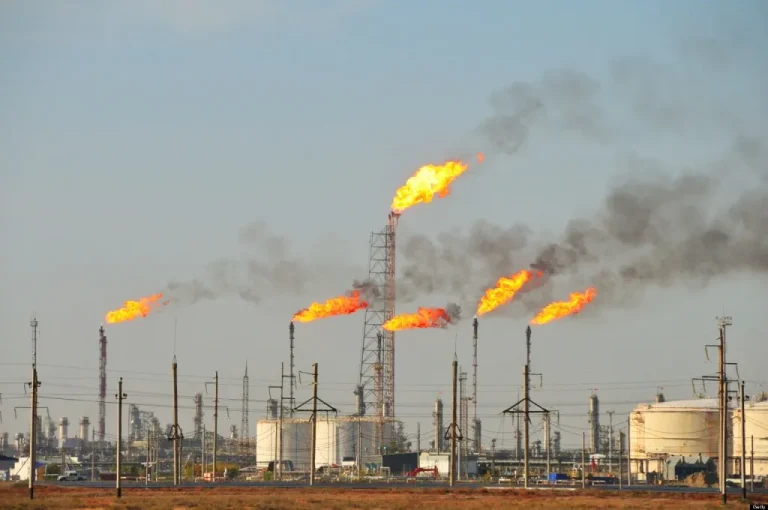
Stakeholders in Nigeria’s extractive sector have raised concerns over the human and environmental consequences of methane emissions and gas flaring in the Niger Delta, warning that the country’s ambition to expand gas production could come at a heavy cost if stronger accountability and enforcement mechanisms are not put in place.
The concerns were raised on Tuesday during a webinar titled “Leveraging Media Storytelling to Strengthen Accountability and Enforcement on Methane Emissions,” organised as part of an advocacy campaign to amplify Flaring Lives, a documentary that exposes the human cost of methane emissions in Nigeria’s oil-producing communities.
The documentary, co-produced by Policy Alert and We The People, with support from the Natural Resource Governance Institute, chronicles the environmental, health and socio-economic impacts of decades of gas flaring and methane emissions on residents of the Niger Delta.
Speaking during the virtual event, the Country Manager of the Natural Resource Governance Institute, Tengi George-Ikoli, said Nigeria currently faces the challenge of balancing its gas expansion agenda with its commitments to reduce methane emissions and eliminate routine gas flaring.
According to her, while methane is often discussed as a climate issue, communities living close to oil and gas facilities experience its effects daily through poor air quality, health challenges, environmental degradation and declining livelihoods.
She said, “Nigeria is currently pursuing two ambitions at the same time. On one hand, we are seeking to expand gas production and position gas as a key part of our economic and energy future. On the other, we have made significant commitments to reduce methane emissions, eliminate routine gas flaring, and contribute to global climate goals.
“The challenge is whether these ambitions can be delivered together, and at what cost if they are not.
“For communities living near oil and gas facilities, methane is not an abstract climate issue. It is connected to the air they breathe, the health risks they face, the quality of their farmland and fishing waters, and their everyday experience of living alongside extraction activities.”
George-Ikoli further noted that methane emissions have increasingly become an economic concern as international markets tighten environmental requirements for oil and gas producers.
She explained that major export destinations, particularly in Europe, are beginning to assess not only the volume of energy products supplied but also the environmental conditions under which they are produced.
“The stakes extend beyond local communities. Methane is one of the most powerful greenhouse gases driving near-term warming. It is also becoming an economic issue.
“New international regulations, including emerging methane requirements in major export markets such as the European Union, mean that countries and companies will increasingly be judged not only by what they produce, but by how they produce it,” she stated.
While acknowledging progress made by the Federal Government and industry players through new methane regulations, reporting requirements and improved emissions disclosures, she stressed that policy commitments alone would not solve the problem.
“Progress on paper is not the same as progress in practice. The real test lies in implementation. Are commitments being met? Are emissions being measured accurately? Are regulations being enforced consistently? And most importantly, are the experiences of affected communities reflected in the decisions being made?” she asked.






Post Comment