Inflation eases to 14.45%, OPS seeks MSME credit support
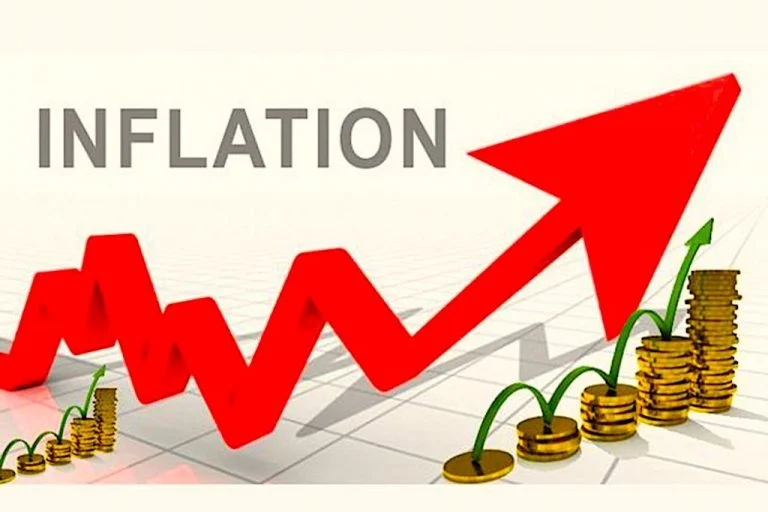
Nigeria’s headline inflation rate eased further in November 2025 as consumer price pressures moderated under the new base year, according to the latest Consumer Price Index report released by the National Bureau of Statistics.
The NBS said the Consumer Price Index rose to 130.5 points in November 2025 from 128.9 points in October, reflecting a 1.6-point increase month on month, but the headline inflation rate declined to 14.45 per cent year on year, compared with 16.05 per cent recorded in October 2025.
This came as the organised private sector stated that the sustained easing of Nigeria’s inflation rate to 14.45 per cent in November 2025 would boost consumer purchasing power and support business activity, while urging the Federal Government to provide targeted credit facilities to micro, small, and medium enterprises.
“The Consumer Price Index rose to 130.5 in November 2025, reflecting a 1.6-point increase from the preceding month (128.9).
In November 2025, the headline inflation rate eased to 14.45 per cent relative to the October 2025 headline inflation rate of 16.05 per cent.
“Looking at the movement, the November 2025 headline inflation rate showed a decrease of 1.6 per cent compared to the October 2025 headline inflation rate,” the NBS report read.
On a month-on-month basis, headline inflation stood at 1.22 per cent in November, higher than the 0.93 per cent recorded in October, indicating that average prices still increased at a faster pace during the month despite the moderation in annual inflation.
The statistical agency noted that on a year-on-year basis, headline inflation in November 2025 was 20.15 percentage points lower than the 34.60 per cent recorded in November 2024, largely reflecting the effect of the rebasing exercise, with the new base year set at 2024 instead of 2009.
Data from the report showed that the average CPI for the twelve months ending November 2025 increased by 20.41 per cent compared with the average of the preceding twelve months, representing a sharp slowdown from the 32.77 per cent recorded in November 2024.
Food and non-alcoholic beverages remained the largest contributor to headline inflation on a year-on-year basis, accounting for 5.78 percentage points, followed by restaurants and accommodation services at 1.87 percentage points and transport at 1.54 percentage points.
Housing, water, electricity, gas, and other fuels contributed 1.22 percentage points, while education services and health accounted for 0.90 and 0.88 percentage points, respectively.
At the month-on-month level, food and non-alcoholic beverages also drove price increases, contributing 0.49 percentage points, followed by restaurants and accommodation services at 0.16 percentage points and transport at 0.13 percentage points.
A breakdown of inflation across locations showed that urban inflation stood at 13.61 per cent year on year in November 2025, representing a steep decline of 23.49 percentage points from the 37.10 per cent recorded in November 2024.
On a month-on-month basis, urban inflation slowed to 0.95 per cent from 1.14 per cent in October, while the twelve-month average urban inflation rate eased to 20.80 per cent.













Post Comment