Experts call for accelerated electric vehicle adoption
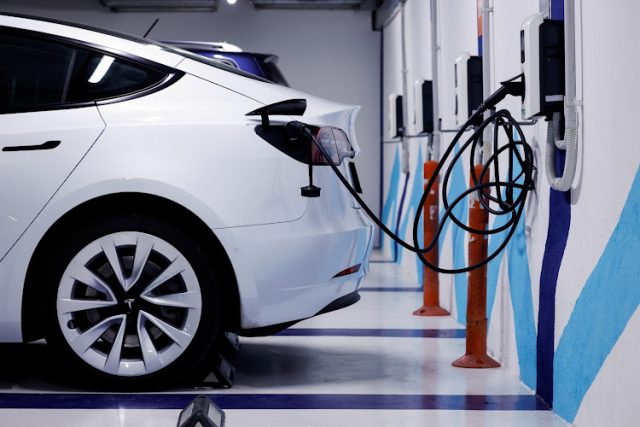
Industry experts, financiers, and policymakers have called for accelerated adoption of electric vehicles in Nigeria as rising fuel prices continue to squeeze household incomes and business margins.
The call was contained in a press statement issued on Wednesday by Alternative Bank, following discussions at the Abuja Compact on Electric Mobility Roundtable.
According to the statement, stakeholders noted that persistent increases in petrol prices are forcing a shift in how Nigerians approach transportation, with electric vehicles emerging as a more cost-effective alternative.
A Business Development and Strategy Manager for the Presidential Initiative on Compressed Natural Gas and Electric Vehicles, Omolara Obileye, who represented the PiCNG Chairman, Ismaeel Ahmed, said the financial advantage of EVs has become increasingly clear.
“Today, charging an electric vehicle for a 200-kilometre journey would cost approximately N4,500. The same journey on petrol would cost about N22,500. That represents a five-to-one cost advantage in favour of electric vehicles,” she said.
She explained that the government’s approach is focused on a gradual transition to a more sustainable energy mix. “What we are navigating is not a choice between CNG and EVs. It is a deliberate, phased energy transition. The goal is a balanced energy mix: one that serves Nigerians today while building the infrastructure required for tomorrow,” she said.
Despite growing interest, she acknowledged that infrastructure gaps, power supply challenges, and affordability concerns remain key barriers. “What we need now is visible momentum, driven by all the stakeholders represented here today,” she added.
The statement also highlighted the broader economic benefits of electric mobility. Chief Executive Officer of Blue Camel Energy Ltd, Yusuf Suleiman, said the transition presents an opportunity to strengthen Nigeria’s economic resilience.
“It is a pathway to improved energy access, a driver of industrialisation, and a foundation for economic resilience, reducing our dependence on imported fossil fuels,” he said.
He noted that the company is investing in solar-powered charging infrastructure to reduce reliance on the national grid. “In reality, charging infrastructure must be able to operate independently of the national grid. What this proves is that a 100 per cent solar-powered charging system can work as a business model,” he said.
For operators, the shift is already being driven by cost savings. Chief Operating Officer of Bankrol Camel EV, Ahmed Garba-Ahmed, said electric vehicles offer a significant reduction in operating expenses.
“Electric vehicles can reduce energy costs per kilometre by up to 60 per cent… For commercial users, ride-hailing drivers, fleet operators, and logistics companies, this is not just about sustainability. It is about margins. It is about profitability. It is about survival,” he said.
He added that the transition is already underway across segments of the transport sector. “The transition to electric mobility in Nigeria is no longer a future projection; it is already happening. The question is not if, but how fast, and who leads,” he said.
The statement further identified financing as a critical enabler of adoption. Mohammed Abdul, Divisional Head, Core North at Alternative Bank, said tailored financing models are helping to overcome entry barriers, particularly for operators in the informal sector.
“Financing is often misunderstood, but it is central to adoption. These models are designed to address the realities of Nigeria’s informal transport sector, where credit histories are limited, and income streams are irregular,” he said.
He added that lease-to-own, pay-as-you-go, and partnership structures are making it easier for drivers and fleet operators to acquire electric vehicles without large upfront payments. “Non-interest banking is not just about finance; it is about values, responsibility, and a commitment to ethical principles. One of the key principles is societal transformation, lifting people from poverty to prosperity,” he said.
Also speaking, President of the Electric Mobility Promoters Association of Nigeria, Dapo Adesina, said electric mobility infrastructure could help improve electricity access. “We can deploy solar-powered charging infrastructure anywhere. EV infrastructure is not just about mobility; it is also about improving energy distribution and utilisation,” he said.
The statement noted that ongoing policy efforts, including proposed legislation and international partnerships, are expected to support local manufacturing and expand infrastructure for electric vehicles.
It added that while challenges persist, the push for electric vehicles is gaining momentum as rising fuel costs continue to reshape Nigeria’s transport landscape and compel businesses to adopt more efficient alternatives.
Petrol prices in Nigeria have surged sharply in recent weeks, climbing to around N1,200–N1,400 per litre in some areas, as the ongoing US–Iran war disrupts global oil supply and pushes crude prices above $100 per barrel.











Post Comment