China considers buying US crude as Middle East crisis bites
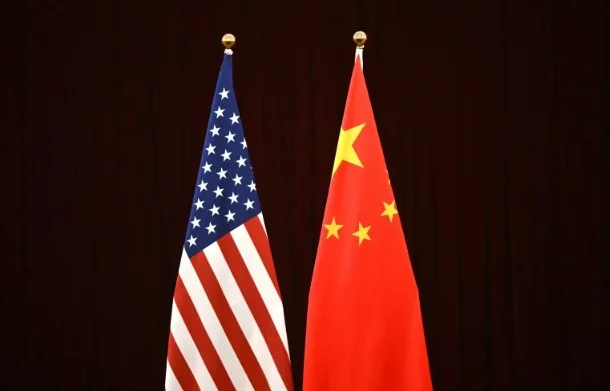
Chinese state-run refiners are considering resuming crude imports from the United States after a nine-month suspension, driven by the ongoing supply crisis in the Middle East, S&P Global’s Platts reported on March 9.
S&P Global reports that the additional 20% tariffs on US crude remain in place, but analysts and refinery sources indicate they may be temporarily overlooked if supply disruptions continue.
“Beijing may even temporarily exempt the additional tariff on US energy if the supply crisis sustains, as this will be a national emergency.
“US ethane is an example — it is exempt from the additional tariff because China almost fully relies on US supply,” a Beijing-based market analyst told Platts.
Last Thursday, China told its largest oil refiners to suspend exports of diesel and gasoline, Bloomberg News reported, citing unidentified sources, as the war in the Middle East risks an energy supply crunch.
A refining source in eastern China echoed the urgency, saying, “The government needs to figure this out to sustain supplies for domestic consumption.”
Shipping data reviewed by Platts suggested that around eight crude cargoes from the US Gulf Coast could be delivered to China, with most likely consisting of light sweet crude, such as WTI Midland.
One of the cargoes had already been loaded on March 7. However, a trade source noted that the cargoes could still be diverted if the supply crisis eases.
The move comes as NYMEX front-month crude surged $20.34 to $111.24 per barrel on March 8 amid disruptions to energy infrastructure caused by the war in the Middle East.
Freight rates for the 270,000-metric ton VLCC US Gulf Coast-China route fell slightly to a lump sum $26 million ($96.30/mt) for typical loadings between March 21 and April 20, down from $28.5 million on March 5 and the record $29.3 million on March 4, Platts reported.
Before the conflict, freight rates had ranged from $53.70/mt to $14.44/mt.
Previously, Chinese refiners had avoided US crude due to tariffs. “It would make a loss of about $30/b after $20/b freight and $16/b tariff,” a South China-based refining source estimated.
“Consider every available barrel”
When asked about resuming US imports, a Beijing-based feedstock procurement strategist from a state-run refining group said, “We are considering it. Tariffs aren’t a big deal any more– the freight rates are even higher than the tariffs.”
“Every barrel available in the world is under our consideration,” the strategist added.
“Supply risk is rising, as the duration of the war may be longer than previously expected.
“We can draw on some commercial inventories, but those are limited, so we must look for anything available,” said a strategist from another state-owned refining group.
China’s state-owned refineries are mandated to prioritize domestic energy supply over profits, according to market sources.
Due to US-China trade tensions, Chinese refiners had suspended US crude imports since June 2025, cutting annual trade flows by 72.6% year-on-year to 2.29 million metric tons.
Despite this, China’s onshore crude inventory reached a record 1.32 billion barrels on March 5, up from 1.31 billion barrels on February 26, according to Ursa Space data. The government has also instructed refineries to slash refined oil product exports to reduce crude consumption.
If disruptions from the Middle East persist, Chinese refiners are expected to draw on these abundant reserves while weighing potential resumption of US crude imports.
Meanwhile with the issues in the Middle East, AFP stated that China said on Monday that Iran’s decision to name Mojtaba Khamenei as its new supreme leader following the killing of his father was a domestic matter, adding that it opposed any attempt to target him.













Post Comment