Banks shut 476 branches in three years – CBN
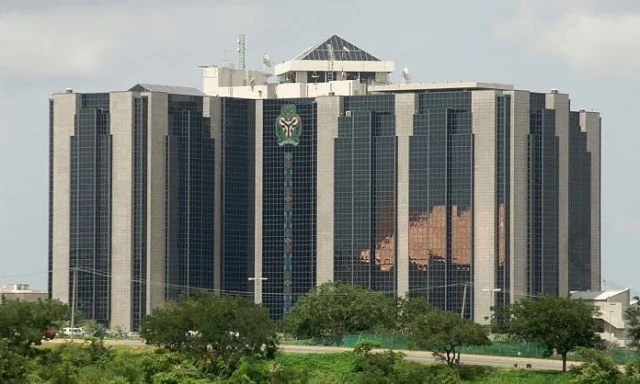
Deposit Money Banks in Nigeria closed a net 476 branches and cash centres between 2022 and 2025, cutting their physical banking footprint by 8.8 per cent in three years, according to data from the Central Bank of Nigeria (CBN).
Figures from the CBN’s 2025 Statistical Bulletin for the Financial Sector showed that the number of bank branches and cash centres nationwide declined from 5,410 in 2022 to 4,934 in 2025.
The contraction occurred despite an increase in the number of banks operating in the country during much of the period, highlighting the banking industry’s gradual shift away from physical locations.
The number of branches and cash centres fell marginally from 5,410 in 2022 to 5,373 in 2023 before the pace of closures accelerated.
A further 229 locations disappeared in 2024, reducing the total to 5,144, while another net 210 branches and cash centres closed in 2025, bringing the nationwide figure to 4,934.
About 92 per cent of the total 476-location reduction therefore occurred in 2024 and 2025.
According to the CBN, the figures cover branches and cash centres operated by commercial, merchant and non-interest banks, with the data sourced from the apex bank and the Nigeria Deposit Insurance Corporation.
Bank numbers rise despite branch closures
While physical banking locations declined, the number of banks operating in Nigeria increased from 32 in 2022 to 33 in 2023 and 35 in 2024 before easing to 34 in 2025.
The number of Nigerian bank branches operating abroad remained unchanged at two throughout the period.
The trend points to a changing banking landscape in which institutions are increasingly relying on digital channels and alternative service platforms rather than expanding traditional brick-and-mortar networks.
Lagos records biggest decline
Lagos recorded the largest reduction in absolute terms, with the number of branches and cash centres falling from 1,602 in 2022 to 1,444 in 2025.
The decline represents a net loss of 158 locations, equivalent to a 9.9 per cent contraction over the three-year period. Lagos alone accounted for roughly one-third of the nationwide reduction.
Despite the closures, the state remained Nigeria’s dominant hub for physical banking operations, accounting for about 29 per cent of the country’s 4,934 branches and cash centres in 2025.
The Federal Capital Territory also recorded a significant decline. Abuja had 400 locations in 2022 and 2023, before the figure dropped to 391 in 2024 and 362 in 2025 — a net reduction of 38 locations, or 9.5 per cent.
Ekiti recorded one of the steepest percentage declines, with its banking network shrinking from 107 locations in 2022 to 57 in 2025. This represented a reduction of 50 locations, or 46.7 per cent.
Enugu lost 44 locations over the period, declining from 162 to 118, while Oyo fell from 237 to 196.
Other states with notable reductions included Ondo, Plateau, Osun, Cross River and Rivers.
Northern commercial centres also affected
The contraction was also visible in some major commercial centres in northern Nigeria.
Kano initially expanded its network from 164 locations in 2022 to 183 in 2024 before recording a sharp decline to 157 in 2025. This left the state with seven fewer banking locations than it had three years earlier.
Kaduna followed a similar trajectory, rising from 148 locations in 2022 to 164 in 2024 before falling to 146 in 2025.
However, not every state recorded a decline.
Delta added 23 banking locations between 2022 and 2025, increasing from 173 to 196. Edo’s network expanded from 155 to 165, while Jigawa increased from 31 to 37 and Kogi from 63 to 68.
Wide gap in banking infrastructure
The CBN data also revealed significant disparities in the distribution of physical banking infrastructure across Nigeria.
While Lagos had 1,444 branches and cash centres in 2025, Yobe had just 23, Taraba 26 and Zamfara 28. Bayelsa and Gombe recorded 31 locations each, while Ebonyi had 32.
Lagos alone accounted for more than 29 per cent of all branches and cash centres nationwide, highlighting the concentration of physical banking infrastructure in Nigeria’s largest commercial centre.
The accelerated decline in physical banking locations comes as Nigeria’s financial sector increasingly embraces electronic and alternative payment channels.
The CBN has also called for greater adoption of alternative payment methods to expand access to financial services and support economic activity, particularly among farmers, traders, small businesses and informal-sector operators with limited access to conventional banking services.
The latest figures suggest that while physical branches remain important to Nigeria’s financial infrastructure, the industry’s service model is increasingly shifting towards digital banking and alternative payment channels.










Post Comment