NNPC JV donates $300,000 to sustain cancer treatment at National Hospital
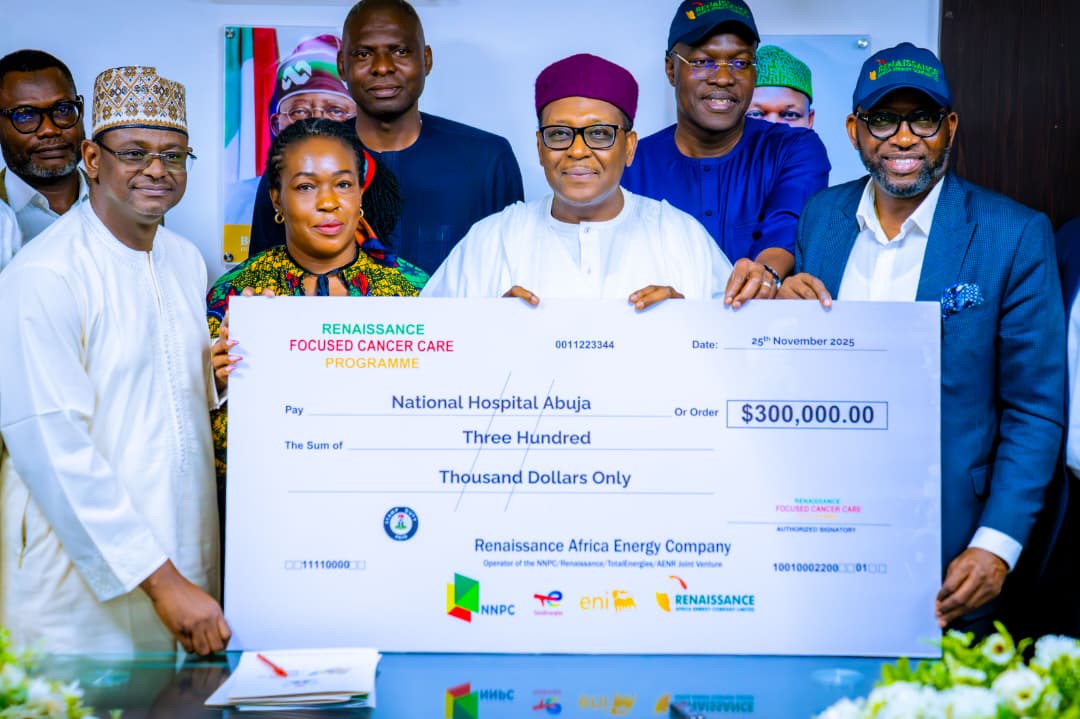
Cancer patients in Abuja have received a major lifeline after the NNPC/Renaissance Joint Venture donated $300,000 to the National Hospital, Abuja, to sustain the maintenance of its advanced cancer treatment machine.
The funding, announced at the office of the Coordinating Minister of Health and Social Welfare, will support the continuous operation of the Linear Accelerator Radiotherapy Machine, one of the most sophisticated cancer-treatment systems available in the country.
The JV had donated the machine in 2019 as part of a comprehensive Corporate Social Responsibility package, which encompassed enhancing the entire ecosystem around cancer treatment, providing and installing necessary data and ancillary systems, and upskilling healthcare professionals to operate the sophisticated machinery.
A statement by the Chief Corporate Communications Officer of NNPC Ltd, Andy Odeh, on Thursday, said the contribution became necessary to prevent treatment disruptions caused by funding gaps in the machine’s maintenance.
Speaking at the event, the Chief Upstream Investment Officer of NNPC Upstream Investment Management Services, Oluwaseyi Omotowa, revealed that the LINAC machine has already transformed cancer care at the hospital.
He listed the benefits to include treatment of over 2,000 patients, an 80 per cent reduction in treatment costs, and a sharp cut in therapy time from 12 minutes to just 2 minutes.
A total of 712 indigent patients have also received subsidised care ranging from 25 to 100 per cent.
Omotowa, represented by the Head of Business Services at NNPC-NUIMS, Nkechi Anaedobe, said sustained maintenance was essential to keep the machine operating at full capacity.
“Some of the benefits of the intervention include: treatment of over 2,000 patients, reduction of treatment cost by 80 per cent, reduction of therapy session time from 12 minutes to 2 minutes, subsidised care for indigent patients, with 712 of them receiving care at discounted rates ranging from 25 per cent to 100 per cent.
“The sustainability of such advanced medical technology hinges on regular maintenance, which presents a critical challenge due to funding constraints,” he said.
He stressed that the donation would ensure timely maintenance to prevent any delays in treatment; minimise downtime with guaranteed response times, ensuring the machine’s availability when needed most; compliance with medical standards and audits, safeguarding the quality of care provided; accurate calibration for effective treatment, which is vital for the precision required in radiotherapy, amongst others.
“This donation will ensure timely maintenance, minimise downtime, guarantee compliance with medical standards, and maintain precise calibration for effective treatment,” he said.





Post Comment